
Carpet beetles are small household pests that can infest carpets, rugs, clothing, upholstery, and other materials made from natural fibers. Although adult carpet beetles may appear harmless, their larvae are responsible for most of the damage.
Carpet beetle larvae feed on wool, fur, feathers, silk, leather, hair, dead insects, and other organic materials. They often remain hidden in dark and undisturbed areas, making an infestation difficult to detect during its early stages.
What Do Carpet Beetles Look Like?
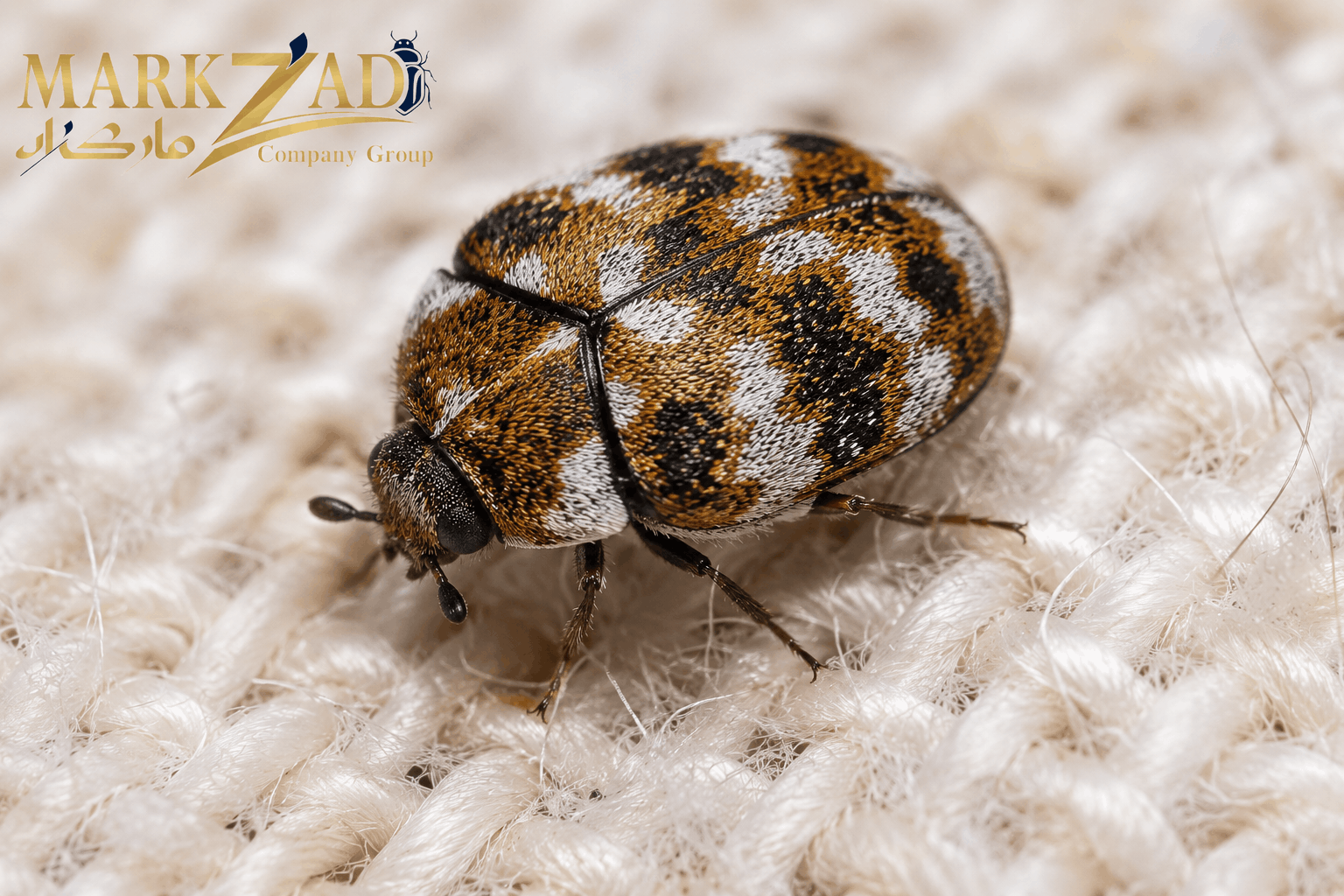
Adult carpet beetles are small and usually have an oval or rounded body. Depending on the species, they may be black, brown, or patterned with white, yellow, and brown scales.
Carpet beetle larvae are typically:
- Small and elongated.
- Covered with dense hairs or bristles.
- Brown, tan, or golden in color.
- Slower-moving than adult beetles.
- Commonly found in dark and concealed areas.
- Capable of hiding inside fabrics and cracks.
Finding shed larval skins is one of the strongest signs of an active infestation.
Where Do Carpet Beetles Live?
Carpet beetles are commonly found in areas containing natural materials, including:
- Carpets and rugs.
- Wardrobes and closets.
- Curtains.
- Upholstered furniture.
- Wool blankets.
- Stored winter clothing.
- Feather-filled pillows.
- Leather and fur products.
- Areas beneath beds and sofas.
- Carpet edges and baseboards.
- Air vents.
- Fabric and furniture warehouses.
Adult beetles may enter buildings through windows and doors, particularly when they are attracted to light, flowers, or nearby plants.
What Do Carpet Beetles Eat?
The larvae feed on materials containing animal-based proteins, such as:
- Wool.
- Silk.
- Fur.
- Feathers.
- Leather.
- Human and animal hair.
- Dead insects.
- Fabrics contaminated with sweat, oils, or food.
- Dust and accumulated organic debris.
They do not normally feed on completely synthetic fabrics. However, they may damage blended fabrics or synthetic materials contaminated with organic substances.
Damage Caused by Carpet Beetles
Damage to Carpets and Rugs
Larvae may feed on natural fibers and create thin areas, damaged patches, or irregular holes.
Damage to Clothing
Wool clothing, blankets, coats, and long-stored garments may be seriously damaged.
Damage to Upholstery
The larvae may hide inside upholstered furniture and feed on natural fabric or stuffing materials.
Damage to Valuable Items
Leather, fur, textile collections, and antique fabrics may be damaged by prolonged infestations.
Skin Irritation
Carpet beetles do not bite. However, the hairs on their larvae may cause itching, redness, or allergic skin reactions in some people.
Do Carpet Beetles Bite Humans?
Carpet beetles do not feed on blood and do not bite people. However, contact with larval hairs can cause a reaction sometimes known as carpet beetle dermatitis.
Possible symptoms include:
- Itching.
- Redness.
- Small bumps.
- Skin irritation.
- A rash after contact with affected clothing or furniture.
These symptoms can sometimes be mistaken for bed bug bites, so a proper inspection is important.
Signs of a Carpet Beetle Infestation
Common warning signs include:
- Small adult beetles near windows.
- Hairy larvae inside wardrobes.
- Shed larval skins.
- Irregular holes in clothing.
- Damage along carpet edges.
- Thin or missing carpet fibers.
- Larvae beneath furniture.
- Repeated sightings of small beetles.
- Damage to stored blankets.
- Larval hairs or insect remains inside closets.
Why Do Carpet Beetles Appear?
Dust and Hair Accumulation
Human hair, pet hair, dead insects, and organic debris provide food for carpet beetle larvae.
Storing Unwashed Clothing
Clothing contaminated with sweat, body oils, or food stains is more attractive to the larvae.
Infrequent Cleaning
Larvae may develop beneath furniture, behind cabinets, and in locations that are rarely cleaned.
Entry from Outdoors
Adult beetles can enter through doors, windows, ventilation openings, or on flowers and plants.
Infested Second-Hand Items
Used rugs, clothing, furniture, and decorative textiles may introduce carpet beetles into a property.
Bird Nests and Dead Insects
Larvae may feed on feathers, nesting materials, and dead insects inside attics, vents, or roof spaces.
The Carpet Beetle Life Cycle
Female beetles lay eggs close to suitable food sources. After hatching, the larvae begin feeding on natural fibers and organic material.
The larval stage causes most of the damage and may last for an extended period when food and favorable conditions are available. The larvae later develop into pupae before emerging as adult beetles.
Adult beetles are often found near light and windows, while larvae prefer dark, quiet, and undisturbed spaces.
Carpet Beetles Versus Bed Bugs
Carpet beetles are sometimes confused with bed bugs, but they are very different pests:
- Bed bugs feed on blood; carpet beetles do not.
- Bed bugs are commonly found around beds and mattresses.
- Carpet beetles infest fabrics, rugs, clothing, and stored materials.
- Carpet beetle larvae are hairy.
- Bed bugs have flat bodies without dense bristles.
- Carpet beetles damage fabrics, while bed bugs leave blood spots and bite-related signs.
A professional inspection provides the most reliable identification.
How to Prevent Carpet Beetles
- Vacuum carpets and rugs regularly.
- Clean carpet edges and areas beneath furniture.
- Wash clothing before long-term storage.
- Store wool and natural fabrics in sealed containers.
- Clean wardrobes periodically.
- Remove accumulated dust and hair.
- Inspect second-hand rugs and furniture.
- Install window screens.
- Remove abandoned bird nests safely.
- Clean air vents and hidden spaces.
- Inspect stored blankets and fabrics.
- Act immediately when larvae or fabric damage are discovered.
How to Get Rid of Carpet Beetles
Locate the Source
Inspect carpets, closets, clothing, upholstered furniture, baseboards, and areas beneath furniture.
Vacuum Thoroughly
Detailed vacuuming can remove larvae, eggs, shed skins, hairs, and organic debris.
Clean Affected Fabrics
Wash or professionally clean affected clothing according to the manufacturer’s care instructions.
Remove Severely Damaged Items
Heavily infested items that cannot be treated may need to be discarded to prevent further spread.
Seal Cracks and Openings
Closing gaps around windows, doors, walls, and baseboards can reduce entry and hiding places.
Seek Professional Treatment
Professional pest control is recommended when larvae appear in multiple rooms or the infestation continues after cleaning.
MarkZad Carpet Beetle Control Services
MarkZad Company Group combats and controls carpet beetle infestations in homes, villas, offices, hotels, warehouses, and other properties.
The service begins with a detailed inspection to locate adult beetles, larvae, damaged materials, and hidden infestation areas. The infestation level and contributing factors are then evaluated before an appropriate control plan is applied.
MarkZad’s carpet beetle control approach includes:
- Inspecting carpets, furniture, wardrobes, and stored fabrics.
- Locating larval hiding areas.
- Treating cracks, edges, and concealed spaces.
- Targeting different stages of the pest’s life cycle.
- Providing cleaning and clothing-storage recommendations.
- Addressing conditions that encourage reinfestation.
- Following up according to the condition of the property.
- Using control methods appropriate for homes and businesses.
MarkZad aims to address the source of the infestation rather than treating only the visible insects, helping provide better protection for clothing, carpets, furniture, and valuable belongings.
Why Early Treatment Matters
Early treatment makes carpet beetle control easier and reduces damage to carpets, clothing, blankets, and upholstery.
When an infestation is ignored, larvae may spread between rooms and closets and reach more stored fabrics and valuable items.
Conclusion
Carpet beetles are household pests capable of damaging carpets, clothing, upholstery, and materials made from natural fibers. They do not bite people, although larval hairs may cause skin irritation in sensitive individuals.
Successful control depends on thorough cleaning, removing food sources, inspecting hidden areas, and storing fabrics correctly. MarkZad Company Group combats carpet beetles through professional inspection, targeted treatment, and practical preventive recommendations.