
Silverfish are small household insects commonly found in humid, dark, and undisturbed areas. Although they are not generally considered dangerous to humans, a large infestation can damage books, documents, wallpaper, cardboard, fabrics, and other stored materials.
MARKZAD Pest Control Company provides professional silverfish inspection and control solutions designed to identify hiding areas, reduce contributing moisture conditions, and control infestations effectively.
What Is a Silverfish?
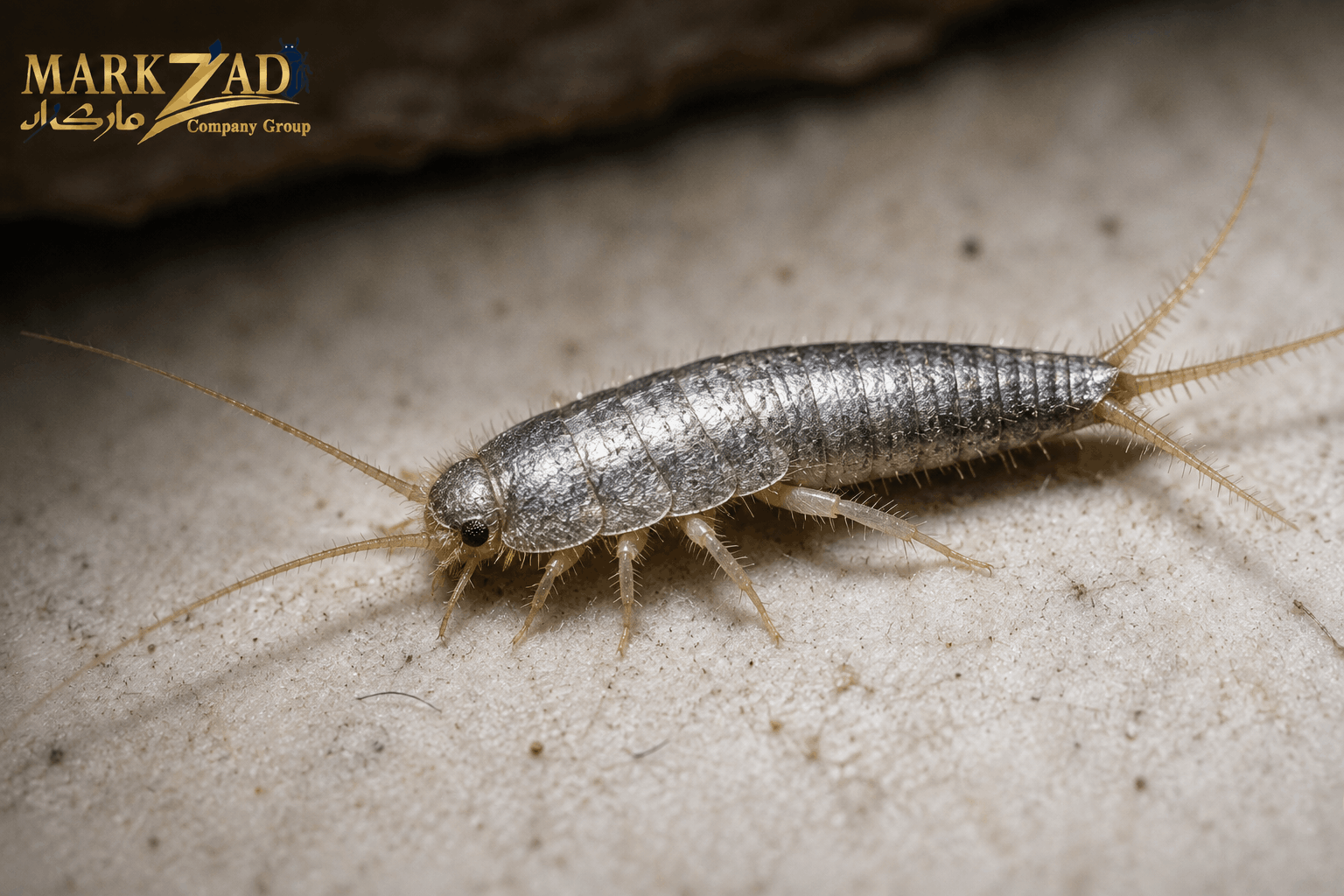
A silverfish is a small, wingless insect with an elongated body covered in silver or gray scales.
Its rapid, wiggling movement resembles the movement of a fish, which is why it is commonly called a silverfish.
Silverfish are primarily nocturnal and usually hide during the daytime in cracks, wall gaps, cabinets, and other dark locations.
Where Do Silverfish Live?
Silverfish prefer warm, humid, dark environments.
They are commonly found in:
- Bathrooms.
- Kitchens.
- Laundry rooms.
- Basements.
- Storage rooms.
- Libraries.
- Under sinks.
- Behind cabinets.
- Around plumbing.
- Behind wallpaper.
- Inside old cardboard boxes.
- Cracks and wall gaps.
High humidity and water leaks can significantly increase the likelihood of a silverfish infestation.
What Causes Silverfish in the Home?
The presence of silverfish is often associated with moisture and suitable food sources.
Common causes include:
- High indoor humidity.
- Plumbing leaks.
- Poor ventilation.
- Damp bathrooms and kitchens.
- Large amounts of stored paper.
- Old cardboard boxes.
- Cracks and hidden wall spaces.
- Starchy or cellulose-based materials.
- Rarely disturbed storage areas.
Addressing these conditions can play an important role in long-term silverfish prevention.
What Do Silverfish Eat?
Silverfish can feed on a wide range of materials containing starch, cellulose, sugars, or proteins.
Their food sources may include:
- Paper.
- Books.
- Bookbinding glue.
- Wallpaper adhesive.
- Cardboard.
- Some fabrics.
- Starchy materials.
- Food residues.
- Stored grains.
- Adhesive materials.
Because of their feeding habits, silverfish can become particularly troublesome in libraries, offices, archives, warehouses, and homes containing large quantities of books or documents.
What Damage Can Silverfish Cause?
Silverfish are not generally considered major disease-carrying insects, but they can still cause significant material damage.
Damage to Books and Documents
Silverfish may scrape or chew paper, leaving small holes and damaged areas.
Wallpaper Damage
They may feed on wallpaper paste and adhesives, gradually damaging the surface.
Cardboard Damage
Cardboard boxes can provide both food and shelter for silverfish.
Fabric Damage
Certain fabrics may also be damaged, particularly when organic or starchy materials are present.
Persistent Infestations
Silverfish can remain inside buildings for extended periods when moisture and food sources are readily available.
Are Silverfish Dangerous?
Silverfish do not normally bite or sting humans and are not generally considered a direct health threat.
However, their presence can damage household materials, and frequent sightings may indicate excessive indoor humidity or hidden water leaks.
Therefore, a silverfish infestation should not always be treated as an isolated insect problem. The underlying moisture conditions should also be investigated.
Signs of a Silverfish Infestation
Common signs include:
- Seeing fast-moving silver insects at night.
- Small holes in books or documents.
- Damaged cardboard boxes.
- Yellowish marks on paper or fabric.
- Silverfish appearing in bathrooms.
- Silverfish appearing beneath furniture or cabinets.
- Activity around damp areas.
- Damage to wallpaper adhesives.
Silverfish Life Cycle
Female silverfish usually deposit eggs in hidden cracks, gaps, or humid locations.
Young silverfish resemble smaller versions of adults and gradually develop as they mature.
When environmental conditions remain suitable, silverfish populations may persist for long periods.
How to Prevent Silverfish
Long-term prevention focuses primarily on reducing moisture and eliminating hiding places.
Reduce Humidity
Use proper ventilation and dehumidification where necessary.
Improve Bathroom and Kitchen Ventilation
Exhaust fans and open windows can help reduce moisture accumulation.
Repair Water Leaks
Inspect sinks, pipes, and plumbing systems regularly.
Remove Old Cardboard
Avoid storing unnecessary cardboard boxes in damp areas.
Store Books Properly
Keep books and important documents in dry, ventilated cabinets.
Seal Cracks and Gaps
Close gaps around walls, flooring, doors, and plumbing penetrations.
Clean Hidden Areas
Vacuuming and cleaning behind furniture and cabinets can reduce food sources and hiding spaces.
How to Control Silverfish
Effective silverfish control requires more than eliminating insects that are immediately visible.
A proper control program should identify the causes of the infestation and address the conditions that allow silverfish to survive.
Professional treatment may include:
- Inspecting the property.
- Identifying infestation zones.
- Detecting moisture sources.
- Treating cracks and hidden spaces.
- Reducing food sources.
- Improving ventilation.
- Monitoring for renewed activity.
MARKZAD Silverfish Pest Control Services
If silverfish are appearing repeatedly inside your home, office, warehouse, or commercial property, MARKZAD Pest Control Company can provide professional inspection and control solutions.
MARKZAD focuses on locating infestation areas, identifying contributing environmental conditions, and implementing an appropriate control program based on the property and level of infestation.
The service may include:
- Detailed inspection.
- Identification of silverfish hiding areas.
- Moisture assessment.
- Treatment of cracks and concealed areas.
- Professional pest control measures.
- Prevention recommendations.
Why Choose Professional Silverfish Control?
Removing visible silverfish may temporarily reduce activity, but the insects can return if humid conditions and hidden breeding areas remain.
Professional pest control specialists can investigate the entire infestation and develop a more comprehensive control and prevention strategy.
MARKZAD Pest Control Company provides specialized pest management solutions designed to reduce silverfish activity and help prevent recurring infestations.
Conclusion
Silverfish are moisture-loving insects that commonly hide in bathrooms, kitchens, storage rooms, libraries, and other dark areas.
Although they typically do not harm humans directly, they can damage books, documents, cardboard, wallpaper, and some fabrics.
Reducing humidity, repairing leaks, improving ventilation, removing unnecessary cardboard, and sealing cracks are essential steps in prevention.
For established infestations, MARKZAD Pest Control Company provides professional silverfish inspection and control services to address both the insects and the environmental factors contributing to their presence.