
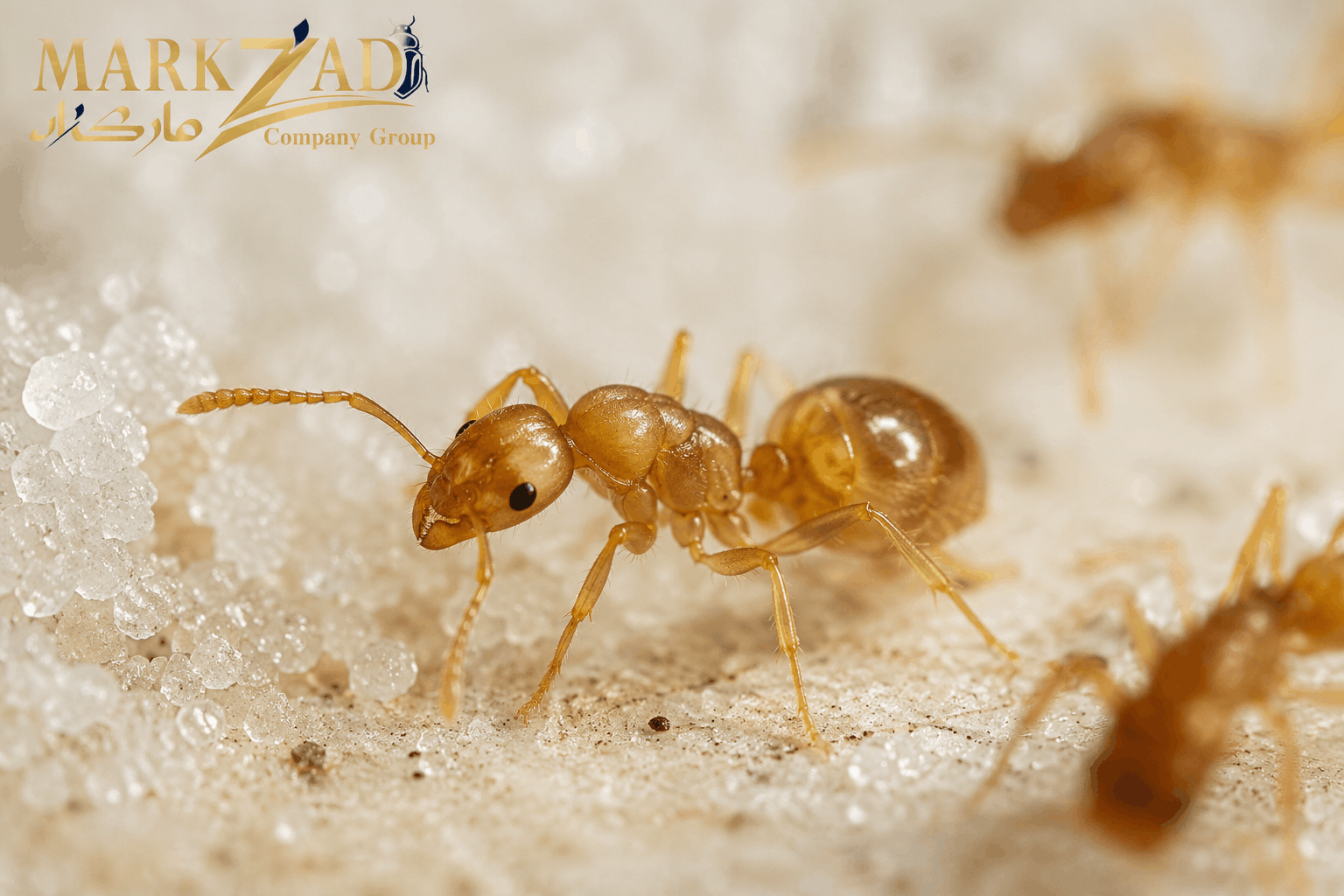
The Pharaoh ant is one of the most difficult indoor ant species to control. Its challenge does not come from physical strength or a painful sting, but from its small size, hidden nesting habits, multiple queens, and ability to establish new satellite colonies throughout a building.
An infestation may begin with a few tiny yellow ants near food or water. Over time, the ants may spread through kitchens, bathrooms, storage rooms, wall voids, plumbing lines, electrical openings, and adjoining apartments.
Improper spraying can make the problem more complicated. When a Pharaoh ant colony is disturbed or exposed to unsuitable insecticides, workers may move brood and one or more queens to new locations. This process is known as budding, and it can turn one concentrated infestation into several separate colonies.
MarkZad Pest Control Company provides targeted Pharaoh ant control for homes, villas, apartments, restaurants, offices, hotels, warehouses, and other facilities, with an approach focused on controlling the hidden colonies rather than only killing visible workers.
What Is a Pharaoh Ant?
The Pharaoh ant, scientifically known as Monomorium pharaonis, is a very small indoor pest ant that has spread worldwide through trade and human activity. Its original range is uncertain, but it is believed to have originated in tropical regions of Africa.
The common name does not prove that the species originated in ancient Egypt. Today, it is recognized as a globally distributed structural pest that is highly adapted to warm, protected areas inside buildings.
Unlike outdoor ants that build visible soil nests, Pharaoh ants often occupy small hidden spaces inside walls, cabinets, equipment, furniture, utility lines, and other protected building voids.
How to Identify Pharaoh Ants
Pharaoh ant workers are extremely small, measuring approximately 1/16 inch in length. Their color generally ranges from pale yellow to reddish, making them difficult to see on light-colored surfaces.
Important identification features include:
- Extremely small worker size.
- Pale yellow or reddish coloration.
- Two nodes between the thorax and abdomen.
- Antennae with 12 segments.
- A three-segmented antennal club.
- No spines on the thorax.
- Organized trails near food and moisture.
Pharaoh ants are often confused with thief ants because both species are tiny and light-colored. Accurate identification may require magnification or professional inspection, and correct identification is important because different ant species may require different control methods.
Pharaoh Ant Life Cycle and Colony Structure
Pharaoh ants develop through the egg, larval, prepupal, pupal, and adult stages. Texas A&M guidance indicates that worker development from egg to adult may take approximately 38 to 45 days under suitable conditions.
A colony may contain:
- One or many queens.
- Sterile female workers.
- Males and reproductive females.
- Eggs, larvae, and pupae.
Pharaoh ant colonies may contain many queens and do not usually depend on conventional mating swarms to establish new nests. Instead, they commonly spread by budding, in which workers move brood and one or more queens to another protected location.
What Is Colony Budding?
Budding occurs when part of an established colony separates and forms a new nest. Workers carry eggs, larvae, or pupae to a different location, often accompanied by one or more queens.
Budding may be triggered by:
- Colony growth.
- Food or water shortages.
- Disturbance of nesting areas.
- Changes in temperature or moisture.
- Improper pesticide applications.
- Repellent sprays applied to ant trails.
This behavior is one of the main reasons Pharaoh ants are difficult to eliminate. An infestation that was originally concentrated near a kitchen may become distributed through bathrooms, bedrooms, wall voids, and adjoining units after unsuitable treatment.
Where Do Pharaoh Ants Nest?
Pharaoh ants prefer protected, warm, dark, and humid locations near food or water.
Common nesting areas include:
- Wall voids.
- Spaces behind baseboards.
- Kitchen cabinets.
- Areas around sinks.
- Plumbing penetrations.
- Electrical and utility openings.
- Spaces behind refrigerators and ovens.
- Areas near water heaters.
- Furniture voids.
- Spaces behind countertops.
- Food-storage rooms.
- Areas affected by condensation.
- Warm spaces around equipment.
University of Minnesota Extension notes that Pharaoh ants may nest behind countertops, baseboards, wall voids, and many other small spaces, often near warm and moist locations.
What Do Pharaoh Ants Eat?
Pharaoh ants feed on many different materials. They are strongly attracted to greasy and fatty foods but may also consume sweet and protein-rich materials.
Common food sources include:
- Cooking oils and grease.
- Meat and protein residue.
- Sugar and sweets.
- Honey and jam.
- Baked products.
- Pet food.
- Food crumbs.
- Dead insects.
- Exposed packaged food.
- Unusual materials such as toothpaste or soap.
Workers also search actively for water, which is why they are frequently found near sinks, leaking pipes, bathrooms, refrigerators, air-conditioning equipment, and condensation.
Their food preferences may change according to the colony’s nutritional needs, so a bait that is attractive during one period may become less attractive later.
Why Pharaoh Ants Appear in Homes
A Pharaoh ant infestation does not always indicate poor housekeeping. Ants may be transported into a building inside boxes, furniture, appliances, supplies, or other infested materials. They can also move between units through wall voids and shared utility systems.
However, the following conditions can support an infestation:
- Food crumbs on floors and surfaces.
- Grease behind kitchen equipment.
- Uncovered sweets and food.
- Poorly sealed food containers.
- Pet food left out for long periods.
- Leaking pipes and sinks.
- Moist kitchens and bathrooms.
- Cracks around utilities.
- Infested boxes or stored materials.
- Repellent spraying that divides the colony.
- Treating only one room in a larger building infestation.
Signs of a Pharaoh Ant Infestation
Warning signs include:
- Tiny yellow ants near food.
- Fine ant trails around sinks.
- Ants inside food cabinets.
- Activity near sugar, honey, meat, or grease.
- Ants returning soon after cleaning.
- Activity in several rooms.
- Trails near electrical outlets or plumbing.
- Movement between kitchens and bathrooms.
- New groups appearing after spraying.
- Persistent activity despite household treatments.
Finding workers in several areas may indicate multiple nesting sites or satellite colonies rather than one accessible nest.
Risks and Damage
Pharaoh ants do not normally cause structural wood damage in the way some other ants do. Their main concerns are food contamination, surface contamination, persistent indoor activity, and their ability to spread throughout buildings.
University of Minnesota Extension notes that Pharaoh ants have been associated with the transmission of pathogens such as Salmonella in some situations, making their control particularly important in kitchens, food-service facilities, and other hygiene-sensitive environments.
Potential problems include:
- Infesting stored food.
- Contaminating packaging and surfaces.
- Moving between apartments or departments.
- Infesting restaurants and food-storage areas.
- Developing several hidden colonies.
- Creating persistent nuisance activity.
- Affecting the reputation of commercial facilities.
- Requiring longer monitoring than many other ants.
Why Pharaoh Ants Are Difficult to Eliminate
Several characteristics make Pharaoh ant control challenging.
Extremely Small Size
Workers can pass through tiny cracks and enter locations that are difficult to inspect or treat.
Multiple Queens
A colony may contain numerous queens. Killing visible workers or treating only one nest section may leave other reproductive ants unaffected.
Multiple Nesting Sites
A building infestation may consist of several interconnected nests.
Budding Behavior
Disturbance or unsuitable insecticides may cause the colony to divide and establish additional nests.
Diverse Food Preferences
Pharaoh ants feed on fats, sweets, proteins, and other food sources, and their preferences may change.
Hidden Nests
Colonies frequently occupy walls, cabinets, plumbing areas, equipment, and structural voids.
Food Sharing
Foraging workers return food to the colony and distribute it to queens, workers, and developing ants. Professional baiting programs use this behavior by providing an attractive, slow-acting bait that can be shared throughout the colony before workers die.
Why Ordinary Spraying Can Make the Problem Worse
Direct sprays may kill visible workers without reaching queens or brood inside hidden nests. Some repellent treatments may also disturb the colony and encourage budding into new areas.
Long-lasting contact insecticides applied to ant trails can prevent workers from reaching bait stations. Texas A&M guidance recommends avoiding these trail treatments during a baiting program because they interfere with bait collection and transfer.
For this reason, mixing household chemicals or repeatedly spraying ant trails is not recommended, especially when the species has not been correctly identified.
Professional Pharaoh Ant Control
Successful control requires an integrated program rather than one quick treatment.
1. Accurate Identification
The first step is confirming that the pest is a Pharaoh ant and not a thief ant or another small ant species.
2. Complete Inspection
A professional inspection may include:
- Following worker trails.
- Identifying food sources.
- Checking moisture and plumbing.
- Locating entry points.
- Inspecting connected rooms or apartments.
- Examining cabinets and equipment.
- Monitoring activity at different times.
- Selecting suitable bait locations.
3. Removing Competing Food
Alternative food sources should be reduced so the ants are more likely to accept the bait.
This includes:
- Cleaning crumbs.
- Removing grease.
- Sealing food containers.
- Removing pet food after feeding.
- Cleaning behind appliances.
- Managing waste regularly.
4. Correcting Moisture Problems
Leaking pipes, wet surfaces, and condensation should be repaired or dried whenever possible.
5. Using Suitable Slow-Acting Baits
Workers feed on the bait and carry it back to the colony, where it can be shared with other workers, queens, and developing ants.
Immediate disappearance is not always expected. Continued worker activity at the bait can be necessary for successful transfer to the colony.
6. Using Multiple Bait Placements
Several small placements may be needed when activity is distributed through different rooms or nesting areas.
7. Monitoring Bait Acceptance
Baits should be inspected to confirm that the ants are feeding. A different formulation may be required if colony food preferences change.
8. Avoiding Repellent Sprays
Repellent pesticides should not be applied over or near active bait placements.
9. Allowing Time for Colony Control
Texas A&M guidance explains that a careful baiting program may require several weeks to control Pharaoh ants effectively.
MarkZad Pharaoh Ant Control Services
MarkZad Pest Control Company approaches Pharaoh ant infestations by focusing on hidden colony activity rather than simply spraying visible workers.
Depending on the property, the service plan may include:
- Inspecting the home or facility.
- Identifying the ant species.
- Following worker trails.
- Locating food and moisture sources.
- Inspecting kitchens, bathrooms, and storage areas.
- Selecting appropriate monitoring and bait locations.
- Avoiding treatments likely to scatter the colony.
- Providing preparation instructions.
- Monitoring bait consumption and ant activity.
- Adjusting the program according to the colony’s response.
Professional assistance is especially valuable when ants occur in several rooms, continue returning after household treatment, or have spread through a multi-unit property. University of Minnesota Extension recommends experienced pest-management service because Pharaoh ant elimination is difficult and unsuitable insecticides can cause budding.
Pharaoh Ant Control in Restaurants
Restaurants and commercial kitchens provide grease, sugar, moisture, warmth, and protected nesting areas.
Inspection should cover:
- Food-preparation areas.
- Spaces beneath cooking equipment.
- Areas behind refrigerators.
- Storage cabinets.
- Dishwashing areas.
- Drains.
- Waste containers.
- Dry-storage rooms.
- Pipe openings.
- Floor and wall gaps.
Food, utensils, and food-contact surfaces must be protected, and all products must be used according to their labels and applicable local regulations.
Pharaoh Ant Control in Hotels and Apartments
Pharaoh ants can move between rooms and apartments through shared plumbing, walls, utility openings, and service corridors.
Control may require:
- Inspecting adjoining rooms.
- Checking kitchens and bathrooms.
- Examining housekeeping storage areas.
- Preventing movement of infested items.
- Coordinating treatment in connected areas.
- Responding quickly to new reports.
Treating a single room may not be enough when the colony network extends through other parts of the building.
Preparing for Professional Treatment
Before service:
- Avoid spraying household insecticides.
- Inform the technician of every activity area.
- Leave trails visible when requested for inspection.
- Clean food residue and grease.
- Store food in sealed containers.
- Remove waste.
- Repair leaking water sources.
- Avoid moving items between affected rooms.
- Keep children and pets away from treatment areas.
- Identify food-handling and sensitive locations.
What to Do After Baits Are Installed
After treatment:
- Do not kill workers feeding at bait placements.
- Do not spray around bait locations.
- Do not relocate baits without instructions.
- Continue maintaining cleanliness.
- Remove competing food sources.
- Monitor activity and report changes.
- Do not expect complete control within hours.
- Keep children and pets away from bait.
- Follow the technician’s instructions and product labels.
The US Environmental Protection Agency advises placing baits in tamper-resistant stations and in areas inaccessible to children and pets. Pesticides should always be used according to their labels.
Pharaoh Ant Prevention
To reduce future infestations:
- Clean kitchen surfaces daily.
- Remove grease and food residue.
- Store sweets in sealed containers.
- Store pet food properly.
- Avoid leaving dirty dishes overnight.
- Remove waste regularly.
- Clean waste containers.
- Repair leaking taps and pipes.
- Dry sinks and wet surfaces.
- Seal openings around plumbing.
- Repair cracks around doors and windows.
- Inspect boxes before bringing them indoors.
- Clean behind appliances.
- Monitor kitchens and storage rooms.
- Avoid random spraying when tiny ants appear.
- Request professional inspection when activity continues.
Sanitation, food storage, moisture management, exclusion, monitoring, and targeted baiting are important parts of integrated ant management.
Frequently Asked Questions
Are Pharaoh ants the tiny yellow ants in my kitchen?
They may be, but several ant species have a similar appearance. Color and size alone are not sufficient for reliable identification.
Do Pharaoh ants bite?
They are not generally known as aggressive or painful ants. Their main concerns are indoor spread, food contamination, and persistent nesting.
Does vinegar eliminate Pharaoh ants?
Cleaning may temporarily remove ant trails, but it does not eliminate hidden queens, brood, or colonies inside walls.
Can household spray kill a Pharaoh ant colony?
It may kill exposed workers but fail to reach the hidden colony. Some repellent treatments may cause the colony to divide and form new nests.
Why do more ants appear after bait is placed?
Workers may recruit other ants to an accepted food source. Increased activity around bait can indicate that the colony is feeding on it.
How long does control take?
The time varies according to infestation size, nest distribution, sanitation, and bait acceptance. A detailed baiting program may require several weeks.
Can Pharaoh ants spread between apartments?
Yes. Their small size allows them to move through wall gaps, plumbing lines, utility openings, and connected building spaces.
Conclusion
Pharaoh ants cannot always be controlled with a quick spray. Their multiple queens, hidden nesting sites, changing food preferences, and budding behavior require accurate identification, strategic baiting, sanitation, moisture control, and ongoing monitoring.
MarkZad Pest Control Company provides professional Pharaoh ant control for residential and commercial properties, with a treatment approach designed to target hidden colony activity, reduce satellite nests, and help prevent recurring infestations.