
What Is a Flour Beetle?
Flour beetles are small stored-product insects commonly found in flour, processed grain, damaged kernels, bakeries, food warehouses, flour mills, and kitchen pantries.
The term usually refers to two closely related species:
- The red flour beetle, Tribolium castaneum.
- The confused flour beetle, Tribolium confusum.
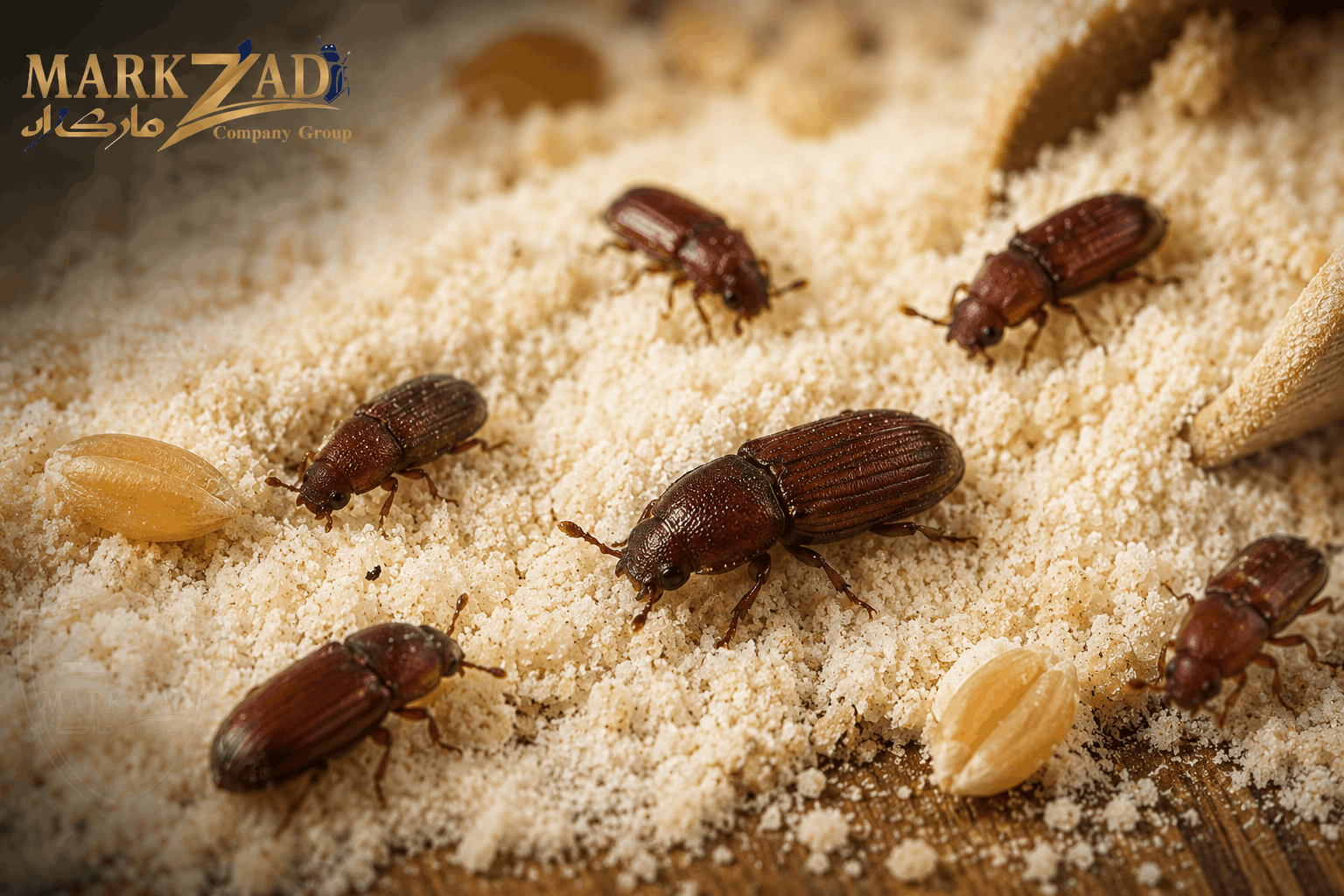
Both species are reddish-brown, flattened beetles that look very similar. They are scavenging pests that generally cannot attack intact, undamaged grain kernels. Instead, they feed on flour, grain dust, broken kernels, processed foods, and grain previously damaged by other insects.
Flour beetles can become serious pests in homes, restaurants, bakeries, warehouses, and food-processing facilities because they contaminate products and spread between packages and storage areas.
What Do Flour Beetles Look Like?
Adult flour beetles have several identifying features:
- A small, narrow, and slightly flattened body.
- A reddish-brown or dark brown color.
- A body length of approximately 3 to 5 millimeters.
- A smooth, shiny appearance.
- Clearly visible antennae.
- Cream or pale-yellow larvae.
- A darker head and tail region on the larvae.
The red flour beetle has antennae that end in a distinct three-segmented club. The confused flour beetle’s antennae gradually increase in size toward the tip.
Red flour beetles are capable of flight under suitable conditions, while confused flour beetles generally do not fly.
Because several pantry beetles have a similar appearance, a magnifying lens or professional identification may be necessary.
Flour Beetles Versus Grain Weevils
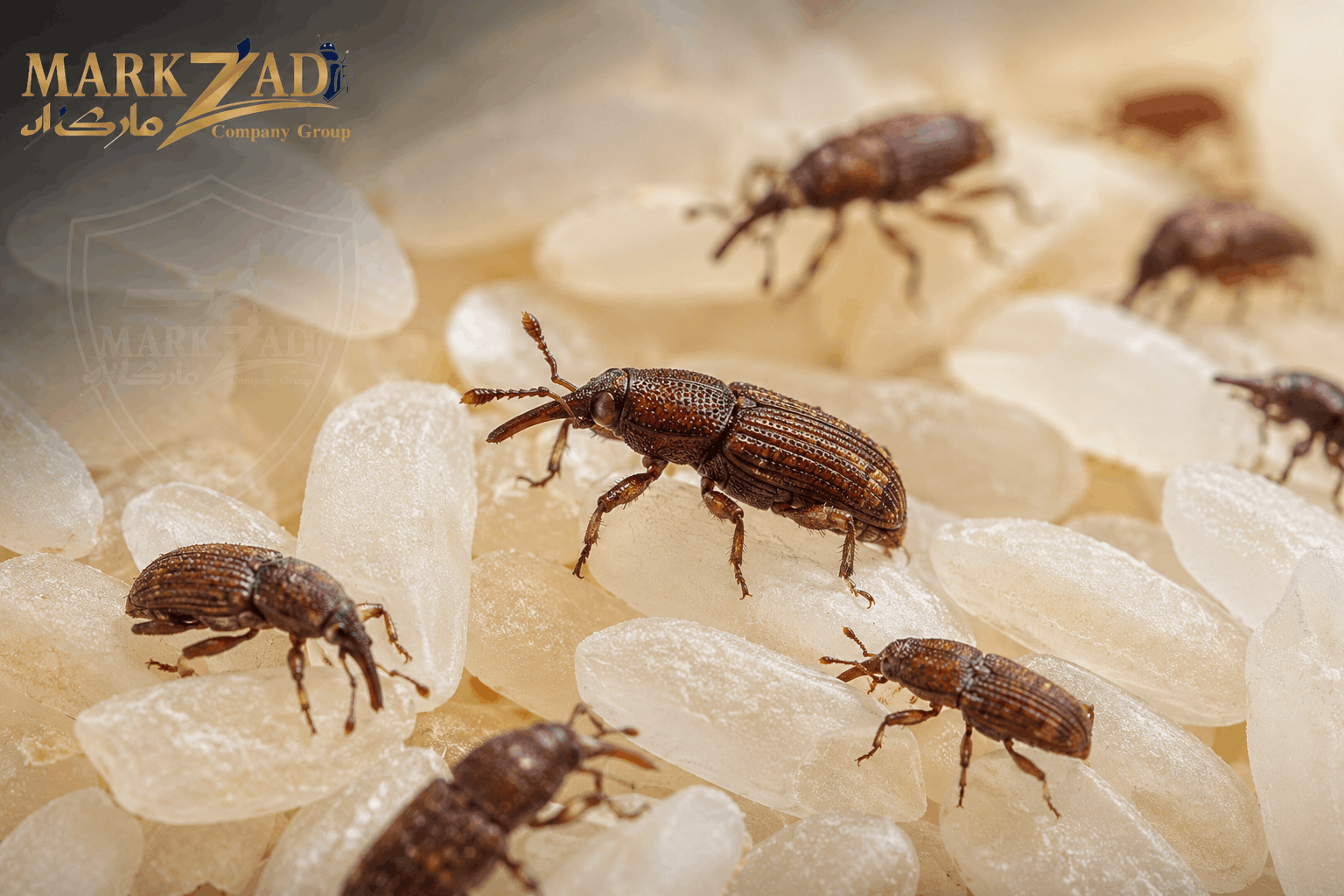
Flour beetles are sometimes incorrectly called flour weevils. However, they are not true weevils and do not possess the elongated snout found on rice and granary weevils.
Grain weevils lay their eggs inside intact grain kernels. Flour beetles normally feed on flour, grain dust, broken grain, and processed foods.
Correct identification is important because different stored-product insects may require different inspection, sanitation, monitoring, and treatment procedures.
Flour Beetle Life Cycle
Female flour beetles deposit small eggs in flour, food material, packaging seams, and storage cracks. Flour particles may stick to the eggs, making them difficult to see.
After hatching, the larvae feed on the surrounding food. They pass through several growth stages before becoming pupae and then adult beetles.
Development speed depends on food availability, temperature, and humidity. Warm storage areas with accumulated flour or grain dust can support rapid population growth.
Adult beetles may continue living and reproducing for an extended period when food residues remain available.
What Do Flour Beetles Eat?
Flour beetles can infest many dry products, including:
- White and whole-wheat flour.
- Cornmeal.
- Semolina.
- Broken grain.
- Cracked rice.
- Oats and breakfast cereals.
- Pasta.
- Cake and baking mixes.
- Biscuits and crackers.
- Nuts.
- Dried beans and peas.
- Dried fruit.
- Chocolate and cocoa products.
- Spices.
- Pet food and birdseed.
- Grain dust inside mills.
They prefer damaged food and broken kernels rather than intact grain and can infest a wide range of processed and stored products.
What Causes a Flour Beetle Infestation?
Infested Food Products
Flour beetles may enter a home or business inside flour, cereal, animal feed, or another product that was already infested.
Eggs and larvae may be present even when no adult insects are visible.
Long Storage Periods
Products kept for extended periods provide enough time for hidden insects to develop and reproduce.
Open or Damaged Packaging
Paper bags, torn packages, and open containers allow beetles to move between foods.
Flour and Grain Dust
Flour accumulated under shelves, machinery, conveyor systems, and storage equipment provides a continuing source of food.
Warm and Humid Conditions
Warm environments and elevated humidity can accelerate the development of many stored-product insects.
Poor Cleaning
Food residues inside cracks, equipment, cabinets, and storage rooms allow infestations to continue even after the original package is removed.
Cross-Infestation
Adult beetles can leave an infested product and enter nearby packages. Red flour beetles may also fly under suitable conditions.
Poor Stock Rotation
Older flour and grain products may remain in storage too long when new stock is used first.
Signs of Flour Beetles
Common signs include:
- Small reddish-brown beetles inside flour.
- Adult insects crawling on pantry shelves.
- Pale larvae inside food products.
- Beetles around flour bags and grain containers.
- Insects hidden inside shelf cracks.
- An unusual odor in flour.
- Changes in product flavor.
- Flour clumping where moisture is present.
- Damaged or open packaging.
- Insects appearing in multiple products.
- Beetles around bakery or mill equipment.
- Adults appearing near windows and lights.
Finding one adult beetle does not always mean the infestation is limited. Eggs, larvae, or additional adults may be present in another package or in accumulated food residues.
Damage Caused by Flour Beetles
Food Contamination
Infested flour may contain eggs, larvae, adult beetles, droppings, and shed insect material.
Unpleasant Odor and Flavor
Large flour beetle populations may produce defensive secretions that create an unpleasant smell and affect the taste of flour or processed foods.
Reduced Product Quality
Infested products may no longer be suitable for restaurants, bakeries, food factories, or household use.
Spread to Other Foods
Beetles may move from flour to cereals, pasta, spices, nuts, dried fruit, and animal feed.
Financial Loss
Food facilities may need to discard large quantities of products, clean machinery, stop operations, and carry out professional pest treatment.
Reputational Damage
Finding insects in flour, bread, or packaged food can result in customer complaints, rejected shipments, and damage to a business’s reputation.
Do Flour Beetles Bite?
Flour beetles do not feed on human blood and are not normally considered biting household pests.
However, they contaminate food with insects and insect debris. Insect fragments and accumulated dust may also trigger allergic responses in sensitive individuals.
Flour showing visible insects, an unusual odor, or heavy contamination should not be used.
Can Infested Flour Be Used?
Flour with a clear infestation should be discarded.
Sifting may remove visible adult beetles but will not reliably remove eggs, larvae, droppings, or small insect fragments.
The infested package should be sealed inside a strong bag and removed from the property immediately to prevent beetles from spreading.
How to Get Rid of Flour Beetles at Home
Inspect All Dry Food
Inspect:
- Flour and baking products.
- Rice and grain.
- Pasta.
- Cereals.
- Dried legumes.
- Nuts.
- Spices.
- Pet food.
- Birdseed.
- Old or open packages.
Discard Infested Products
Place affected products in sealed bags and remove them immediately.
Do not leave infested food in an indoor kitchen bin, because beetles may escape.
Clean Pantry Cabinets
Empty the cabinet and vacuum shelves, corners, holes, and cracks to remove insects, eggs, flour, and food residues.
Wipe the surfaces and allow them to dry before returning safe products.
Empty the Vacuum Outside
Dispose of the vacuum bag or empty the container outside the property immediately after cleaning.
Use Airtight Containers
Store unaffected foods in thick plastic, metal, or glass containers with tightly fitted lids.
Integrated pest management guidance emphasizes sanitation, inspection of incoming foods, and the use of pest-resistant containers.
Seal Cracks
Clean and seal cracks in cabinets and shelving where flour, eggs, and beetles may accumulate.
Continue Monitoring
Inspect the pantry and new food packages regularly for several weeks after cleaning.
Can Freezing Kill Flour Beetles?
Freezing may help kill different life stages in lightly affected dry food. The food should be placed in a sealed container and kept in a suitable freezer for several days.
Heavily contaminated flour, products with a strong odor, or food containing large numbers of insects should be discarded rather than treated.
Keep the package closed while it returns to room temperature to reduce condensation.
Can Heat Control Flour Beetles?
Controlled heat can be used as part of a professional stored-product pest management program, particularly in flour mills and food-processing facilities.
Effective heat treatment requires the necessary temperature to reach hidden areas, machinery, cracks, and pest life stages for a sufficient period.
Large-scale heat treatment should be performed and monitored by trained professionals to prevent damage to buildings, equipment, or stored goods.
Do Insecticides Eliminate Flour Beetles?
Approved insecticides may be used in empty cracks, crevices, and selected storage areas, but chemical treatment cannot replace removal of infested food and thorough cleaning.
Accumulated flour and grain dust may interfere with some treatments and provide protected food and shelter for insects.
Never spray pesticides directly on flour, grain, exposed food, or food-preparation surfaces. Any pesticide must be used strictly according to its label and applicable safety procedures.
Flour Beetle Control in Mills and Bakeries
Commercial facilities require a detailed integrated pest management program, including:
- Inspecting incoming raw materials.
- Isolating suspicious shipments.
- Cleaning milling and mixing equipment.
- Removing flour beneath machinery.
- Cleaning conveyors, elevators, and production lines.
- Sealing structural cracks.
- Emptying and cleaning storage areas.
- Monitoring humidity and temperature.
- Keeping products away from walls and floors.
- Applying first-in, first-out stock rotation.
- Using suitable monitoring traps.
- Recording pest locations and activity.
- Training employees to identify infestation signs.
- Using professional pest control when necessary.
Surface treatment alone may not keep stored products insect-free. Sanitation, monitoring, exclusion, and stock management must be included in the control program.
MarkZad Flour Beetle Control Services
MarkZad Pest Control Company provides professional flour beetle and stored-product pest control services for:
- Homes.
- Restaurants.
- Bakeries.
- Flour mills.
- Grain warehouses.
- Food factories.
- Grocery stores.
- Hotels and central kitchens.
- Animal-feed storage areas.
The service begins with an inspection to identify the pest, find the infestation source, and determine the extent of activity.
MarkZad’s services may include:
- Inspecting flour and grain products.
- Identifying primary infestation sources.
- Examining shelves, machinery, and structural cracks.
- Treating suitable pest-hiding areas.
- Advising on safe disposal of infested products.
- Developing sanitation and monitoring programs.
- Improving food-storage and stock-rotation practices.
- Controlling adult insects and immature stages in approved treatment areas.
- Providing follow-up recommendations.
- Developing solutions for residential and commercial sites.
Why Choose MarkZad Pest Control Company?
MarkZad Pest Control Company uses an integrated approach rather than relying on random pesticide applications.
Effective flour beetle control requires source removal, sanitation, exclusion, monitoring, and appropriate treatment.
Key advantages include:
- Specialists in stored-product pest control.
- A thorough inspection before treatment.
- Accurate pest identification.
- Solutions for mills, bakeries, and warehouses.
- Safety-focused procedures in food facilities.
- Treatment plans based on the infestation level.
- Practical sanitation and storage recommendations.
- Monitoring programs for commercial facilities.
- Control of several pantry and warehouse pest species.
MarkZad is a suitable choice for customers looking for a flour beetle control company in Riyadh or professional flour mill and warehouse pest management.
How to Prevent Flour Beetles
- Purchase flour and grain from reliable suppliers.
- Inspect packages before purchase.
- Avoid torn or damaged packaging.
- Buy quantities that can be used within a reasonable period.
- Use older stock before newer stock.
- Store flour in airtight containers.
- Clean pantry cabinets regularly.
- Remove spilled flour immediately.
- Keep packages properly closed.
- Maintain dry storage conditions.
- Repair leaks and moisture sources.
- Inspect pet food and birdseed.
- Isolate suspicious products.
- Clean bakery and mill equipment regularly.
- Maintain an ongoing pest-monitoring program.
- Contact professionals when insects continue to appear.
Frequently Asked Questions
Can Flour Beetles Fly?
Red flour beetles can fly under suitable conditions. Confused flour beetles generally do not fly.
Do Flour Beetles Infest Rice?
They may feed on broken or damaged rice and processed grain material, but they do not normally penetrate intact rice kernels in the same way as rice weevils.
Are Flour Beetles the Same as Rice Weevils?
No. Flour beetles belong to the genus Tribolium and normally feed on processed or broken grain products. Rice weevils belong to the genus Sitophilus, and their larvae develop inside grain kernels.
Do Flour Beetles Damage Clothing?
Flour beetles do not normally feed on clothing. Insects damaging fabric may be carpet beetles or clothes moths.
Do Bay Leaves Repel Flour Beetles?
There is no reliable evidence that bay leaves or similar household remedies will eliminate stored-food pests. Effective control depends on removing infested products, cleaning the area, and storing food in airtight containers.
When Is Professional Treatment Needed?
Professional help is recommended when:
- Multiple packages are infested.
- Beetles continue to appear after cleaning.
- The infestation is inside a bakery or flour mill.
- Insects are established inside machinery.
- The source cannot be identified.
- Infestations repeatedly return.
- Large quantities of food are stored.
Conclusion
Flour beetles are common stored-product pests that can spread inside homes, bakeries, flour mills, and warehouses when flour residues, warm temperatures, moisture, and poor storage conditions are present.
Successful flour beetle control requires identifying and discarding infested products, cleaning cabinets and machinery, removing flour residues, improving stock rotation, and using airtight containers.
When an infestation is widespread or recurring, MarkZad Pest Control Company provides professional flour beetle and stored-product pest management services through detailed inspection, source identification, targeted control, sanitation guidance, and preventive recommendations.