
What Is a Rice Weevil?
The rice weevil, scientifically known as Sitophilus oryzae, is a small beetle that infests stored grains and dry food products.
Despite its name, the rice weevil does not attack rice alone. It can also infest wheat, corn, barley, oats, pasta, seeds, animal feed, and several other stored grain products.
The female rice weevil uses its long snout to make a small hole in a grain kernel. It lays an egg inside the grain and seals the opening. The larva then develops and feeds inside the kernel, making early infestations difficult to detect.
A rice weevil infestation can begin in a single package before spreading to other foods stored inside kitchen cabinets, restaurants, warehouses, mills, and food-processing facilities.
What Does a Rice Weevil Look Like?
Rice weevils have several identifying characteristics:
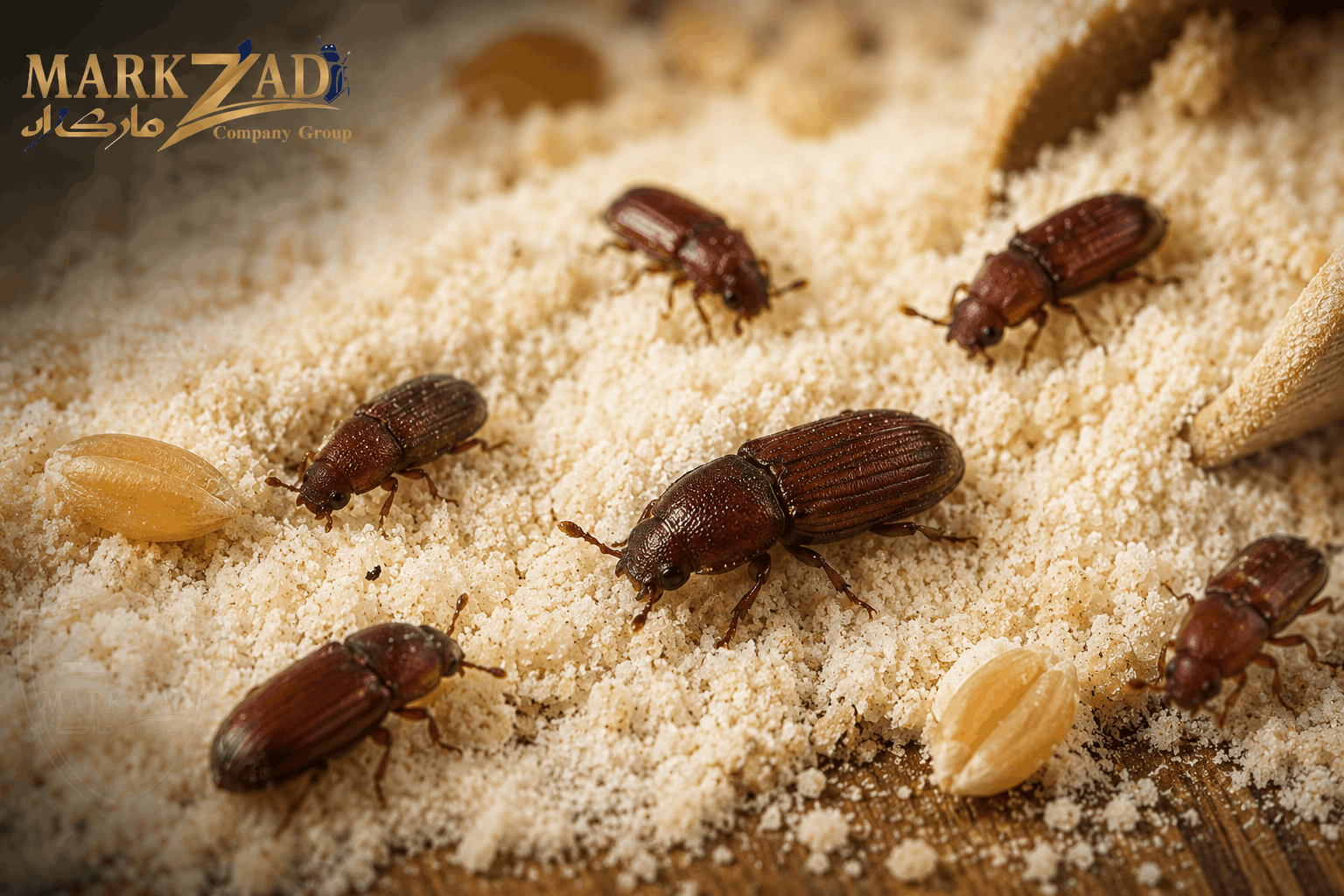
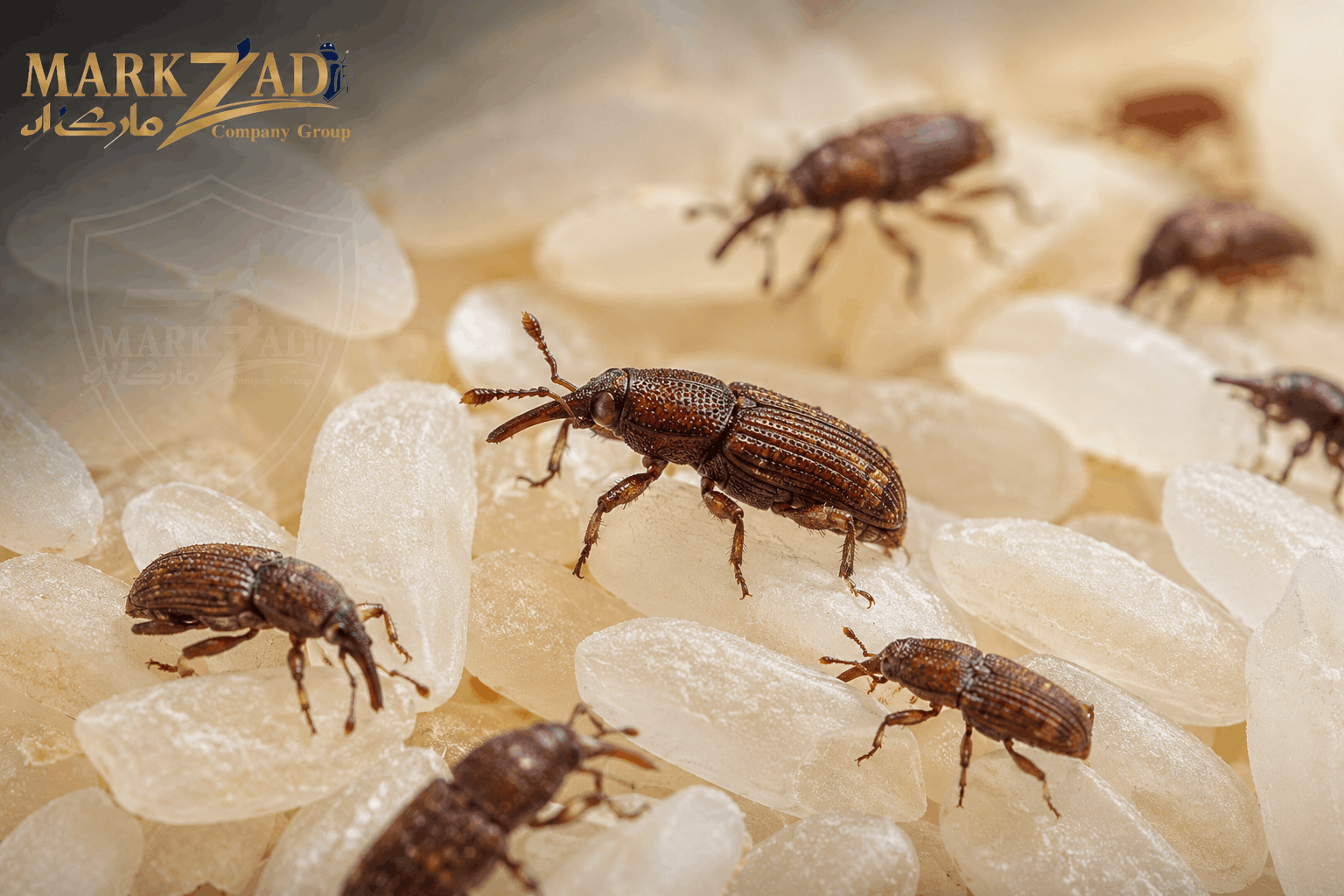
- Adults are usually between 2 and 4 millimeters long.
- Their bodies are reddish-brown or dark brown.
- They have a distinctive elongated snout.
- Some adults have lighter markings on their wing covers.
- Adult rice weevils can fly.
- The larvae are white, legless, and curved.
- Larvae develop inside individual grain kernels.
Seeing small brown beetles moving through rice or stored grains is one of the clearest signs of an infestation.
The Rice Weevil Life Cycle
The life cycle begins when a female rice weevil creates a hole in a grain kernel and deposits an egg inside it.
After the egg hatches, the larva feeds on the grain from within. The grain may still appear normal from the outside while the larva continues developing inside it.
The larva later changes into a pupa within the grain. Once development is complete, the adult rice weevil chews a round exit hole and leaves the kernel.
Warm temperatures and elevated humidity can accelerate reproduction, allowing rice weevil populations to grow rapidly inside untreated storage areas.
What Causes Rice Weevils?
Rice weevils can appear in homes and commercial facilities for several reasons.
Infested Products
Eggs or larvae may already be present inside rice or grain when the product is purchased, even when the packaging appears undamaged.
Long Storage Periods
Grain stored for extended periods provides enough time for hidden larvae to develop and reproduce.
Warm and Humid Conditions
High temperatures and humidity support the growth and reproduction of many stored-product pests.
Poorly Sealed Containers
Open bags, cardboard packaging, and thin materials allow adult insects to move between products.
Food Residues
Spilled rice, flour, seeds, and grain dust inside cabinets provide a continuing food source for stored-product insects.
Cross-Infestation
Adult rice weevils can leave one infested package and enter other grain, pasta, seed, or dry food packages.
Poor Stock Rotation
In warehouses and restaurants, older products may remain unused for long periods when new stock is placed in front of them.
Signs of a Rice Weevil Infestation
The most common signs include:
- Small brown insects inside rice or grain packages.
- Round holes in individual kernels.
- Fine grain dust at the bottom of a package.
- Hollow or unusually lightweight kernels.
- Adult insects moving inside pantry cabinets.
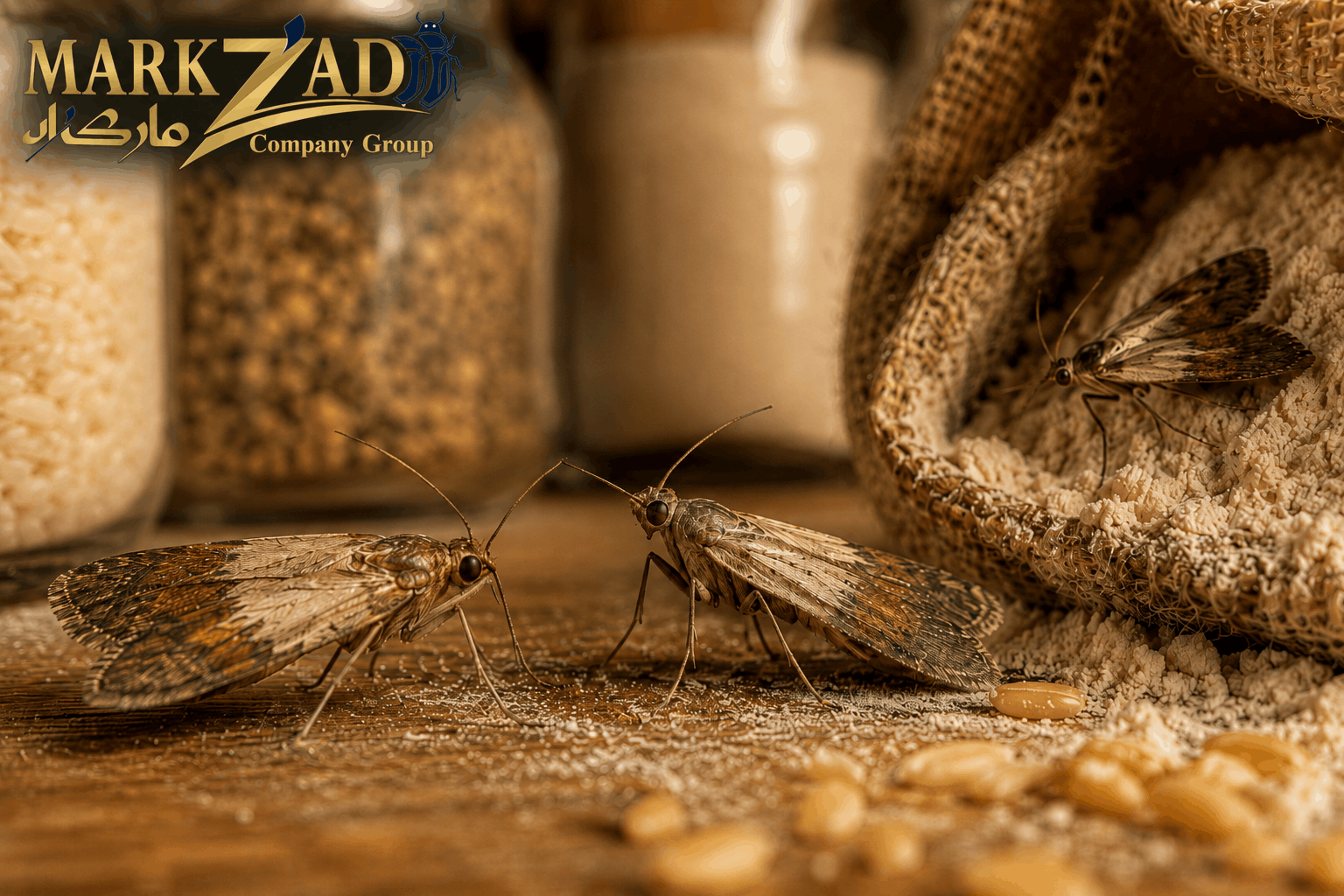
- Weevils appearing near windows or lights.
- White larvae developing inside grains.
- Unusual odors in stored products.
- Infestation spreading to multiple packages.
When one infested package is discovered, all nearby dry foods should be inspected.
Foods Commonly Infested by Rice Weevils
Rice weevils may infest:
- Rice.
- Wheat.
- Corn.
- Barley.
- Oats.
- Whole grains.
- Pasta.
- Some dried legumes.
- Bird food.
- Animal feed.
- Stored seeds.
- Grain products in mills and factories.
Other pantry pests may also infest flour, spices, nuts, and processed foods. Proper identification is important before treatment begins.
Damage Caused by Rice Weevils
Rice weevils do not bite people, but they can cause serious food contamination and financial loss.
Grain Damage
Larvae consume the inside of grain kernels, reducing their weight, quality, and nutritional value.
Food Contamination
Infested food may contain adult insects, larvae, eggs, droppings, shed skins, and damaged grain material.
Rapid Spread
Flying adults can move between packages, shelves, rooms, and storage areas.
Commercial Losses
Restaurants, warehouses, and food facilities may need to dispose of large quantities of grain and suspend storage operations during cleaning and treatment.
Reduced Product Quality
Infested grains may develop unpleasant odors, poor flavor, damaged kernels, and reduced suitability for cooking or processing.
Damage to Business Reputation
Rice weevils in restaurants, food stores, or factories can result in complaints and concerns about sanitation and quality control.
Are Rice Weevils Harmful to Humans?
Rice weevils do not normally bite or live on humans. However, heavily infested food should not be consumed because it may contain insect fragments, waste, and other contaminants.
Dust and insect material may also trigger allergic reactions in sensitive individuals.
Products showing clear signs of infestation should be discarded, and the storage area should be thoroughly cleaned.
How to Get Rid of Rice Weevils at Home
Effective rice weevil control requires removing the source and cleaning the surrounding area.
Inspect All Dry Foods
Remove rice, grains, flour, pasta, seeds, cereals, and legumes from the cabinet and inspect every package.
Discard Heavily Infested Products
Place infested food in sealed bags and remove it from the property immediately to prevent insects from escaping.
Clean the Cabinets
Vacuum shelves, corners, holes, and cracks to remove insects, eggs, food residues, and grain dust. Wipe the surfaces and allow them to dry completely.
Dispose of the vacuum contents outside the property after cleaning.
Use Airtight Containers
Store safe products in thick plastic, metal, or glass containers with secure lids.
Reduce Long-Term Storage
Purchasing reasonable quantities reduces the time grains remain stored and limits the opportunity for pests to reproduce.
Inspect New Purchases
Check packaging for holes, insects, grain dust, and damage before placing new products in the pantry.
Contact a Professional Pest Control Company
Professional treatment may be required when insects continue to appear or when the infestation has spread to several cabinets or commercial storage areas.
Does Washing Rice Remove Weevils?
Washing may remove some visible adult insects, but it does not guarantee the removal of eggs and larvae developing inside the kernels.
Washing also does not eliminate insects hidden in cabinets or other food packages. Heavily infested rice with damaged or hollow kernels should be discarded.
Can Sunlight Eliminate Rice Weevils?
Exposing grain to sunlight may encourage some adult insects to leave the product, but it is not a reliable method for killing eggs and larvae hidden inside the kernels.
The infestation may return if storage cabinets and nearby packages are not inspected and cleaned.
Can Freezing Kill Rice Weevils?
Freezing can help kill different life stages in small quantities of grain that are not heavily damaged. The package may be placed in a suitable freezer for several days.
The product should remain sealed while returning to room temperature to help prevent condensation and moisture damage.
Freezing should not be used to save products that contain large numbers of insects, droppings, or severely damaged grain.
Is Insecticide Safe for Food Cabinets?
Insecticides should never be sprayed directly onto rice, grain, food packaging, or food-contact surfaces unless the product is specifically approved for that use and applied according to its label.
Improper chemical use can contaminate food and create unnecessary risks. Food products should be removed before professional treatment, and all safety instructions must be followed.
Rice Weevil Control in Warehouses
Warehouses, grain facilities, restaurants, and food factories require a detailed pest management program that may include:
- Inspecting incoming shipments.
- Monitoring temperature and humidity.
- Cleaning floors, corners, and machinery.
- Removing spilled grain and dust.
- Keeping products away from walls and floors.
- Applying first-in, first-out stock rotation.
- Isolating infested shipments.
- Monitoring activity with appropriate traps.
- Inspecting packaging regularly.
- Using professional stored-product pest control.
Severe commercial infestations may require specialized fumigation. Fumigation must only be performed by licensed and trained professionals because fumigant products can be extremely hazardous.
MarkZad Rice Weevil Control Services
MarkZad Pest Control Company provides integrated solutions for rice weevils, grain weevils, and other stored-product pests in homes, restaurants, warehouses, mills, shops, and commercial facilities.
The service begins with a detailed inspection to identify the pest species, locate the source of the infestation, and determine how far the insects have spread.
MarkZad’s services may include:
- Inspecting kitchen cabinets and food-storage areas.
- Identifying infested products.
- Locating cracks and hidden insect activity.
- Treating adult insects and other life stages.
- Developing solutions for residential and commercial properties.
- Providing storage and sanitation recommendations.
- Monitoring treated areas.
- Preventing the infestation from returning.
- Controlling different types of pantry and stored-product pests.
Why Choose MarkZad Pest Control Company?
MarkZad focuses on inspection and accurate identification before treatment. Eliminating visible insects alone may not solve the problem because larvae can remain hidden inside grain kernels.
Key advantages include:
- Specialists in stored-product pest control.
- Detailed inspection of the infestation source.
- Suitable treatments for homes, restaurants, and warehouses.
- Attention to safety in food-storage environments.
- Solutions selected according to the pest and property.
- Practical advice for proper food storage.
- Follow-up plans for commercial facilities.
- Integrated control of rice weevils and other pests.
MarkZad is a suitable choice for customers searching for a rice weevil pest control company or professional pest control services in Riyadh.
How to Prevent Rice Weevils
The following measures can reduce the risk of future infestation:
- Buy grains from trusted suppliers.
- Avoid damaged or punctured packages.
- Inspect rice and grain before storage.
- Use airtight storage containers.
- Clean pantry cabinets regularly.
- Remove spilled rice, flour, and grain dust.
- Avoid storing excessive quantities.
- Use older products before newer ones.
- Keep storage areas dry.
- Repair water leaks and moisture problems.
- Clean commercial storage facilities regularly.
- Isolate any suspicious package.
- Contact pest control specialists if insects return.
Frequently Asked Questions
Do Rice Weevils Infest Clothing?
Rice weevils feed on stored grains and do not normally damage clothing. Insects found inside clothing may be carpet beetles or clothes moths.
Can Rice Weevils Fly?
Yes. Adult rice weevils can fly, allowing them to spread between packages and storage locations.
Do Rice Weevils Eat Wood?
Rice weevils do not feed on wood. They may hide temporarily in cracks near stored food but are not wood-destroying insects.
Can They Spread to Flour?
Other pantry insects commonly infest flour, and adult rice weevils may be found around flour packages. All dry food products should be inspected when an infestation is discovered.
When Should Professional Treatment Be Used?
Contact a professional pest control company when insects infest multiple packages, continue to appear after cleaning, or are found inside restaurants, warehouses, mills, or food-processing facilities.
Conclusion
Rice weevils are common stored-grain pests that can begin inside one package and spread throughout a pantry or warehouse.
Successful rice weevil control requires removing infested products, cleaning storage areas, using airtight containers, reducing humidity, and inspecting new food purchases.
When the infestation is widespread or continues to return, MarkZad Pest Control Company provides professional rice weevil and stored-product pest control services. Through detailed inspection, source identification, targeted treatment, and prevention guidance, MarkZad helps protect food, homes, and commercial facilities from recurring infestations.