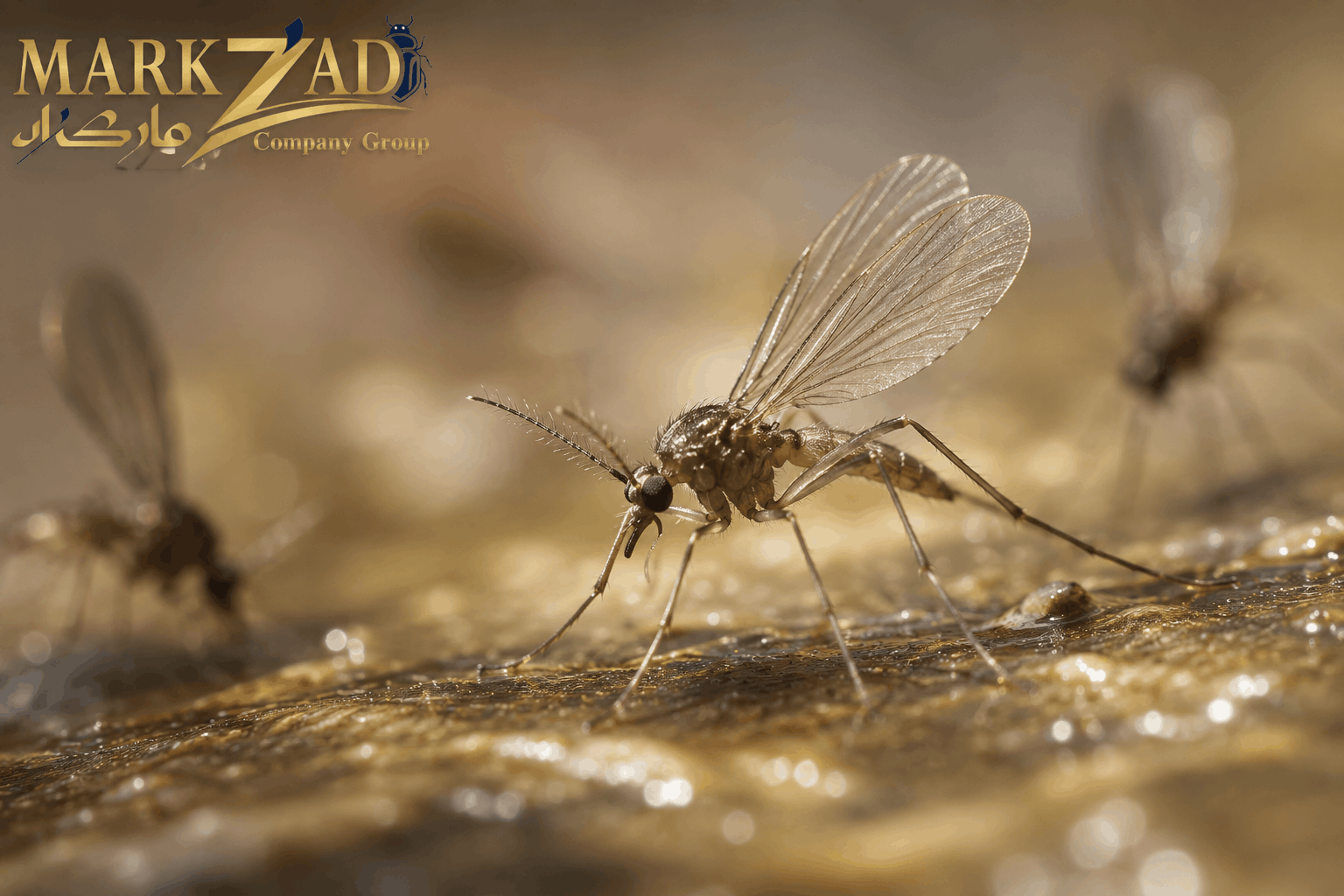

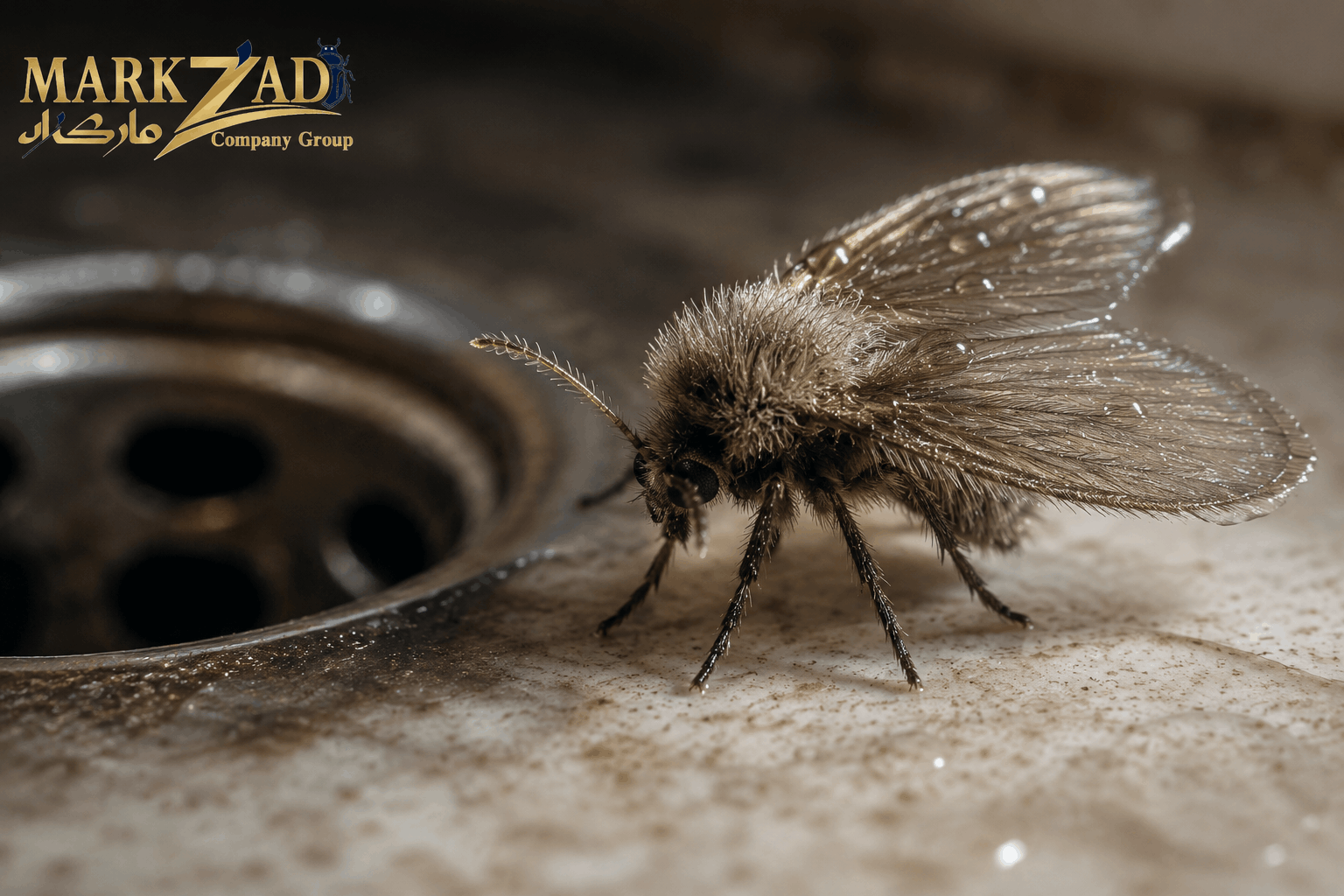
Drain flies, also known as moth flies, sewer flies, or filter flies, are tiny flying insects commonly found around sinks, bathrooms, kitchens, drains, and other damp areas.
Their bodies and wings are covered with fine hairs, giving them a fuzzy, moth-like appearance. They are weak fliers and usually remain close to the drain or damp area where they are breeding.
Repeated sightings around a particular drain commonly indicate a buildup of moist organic material inside the pipe.
What Do Drain Flies Look Like?
Drain flies have several recognizable features:
- A very small body.
- Gray, brown, or dark coloration.
- Hair-covered bodies and wings.
- Broad, rounded wings.
- Noticeable antennae.
- Weak, short-distance flight.
- Frequent resting on walls near sinks and drains.
When resting, their wings may form a roof-like or heart-shaped outline over the body.
Where Do Drain Flies Live?
Drain flies develop in damp locations containing decaying organic matter, including:
- Sink drains.
- Bathroom drains.
- Kitchen drains.
- Floor drains.
- Infrequently used pipes.
- Laundry sinks.
- Air-conditioning drainage systems.
- Water-leak areas.
- Sewage tanks.
- Inspection chambers.
- Sewer-related areas.
- Containers holding contaminated standing water.
They may also develop in the slimy residue found around cooling equipment, drainage channels, and damp utility areas.
What Do Drain Flies Feed On?
Drain fly larvae feed on the moist organic film that forms inside drains and pipes.
This material may include:
- Food particles.
- Grease and oil.
- Hair.
- Soap residue.
- Skin cells.
- Fungi and bacteria.
- Organic sludge.
- Decaying material.
Eliminating adult flies without removing this organic film will usually not provide lasting control.
The Drain Fly Life Cycle
Drain flies pass through four developmental stages:
- Egg.
- Larva.
- Pupa.
- Adult.
Females lay eggs in wet organic deposits inside drains. After hatching, the larvae live and feed within the slime layer before developing into pupae and emerging as adults.
The life cycle may be completed within several weeks when moisture, warmth, and food are available. A single untreated drain can therefore produce many adult flies.
Why Do Drain Flies Appear?
Organic Buildup Inside Pipes
Grease, hair, food residue, and soap create suitable feeding and breeding material.
Infrequently Used Drains
Unused drains may retain moisture and organic debris for long periods.
Water Leaks
Hidden leaks beneath sinks, behind walls, or around equipment can create additional breeding locations.
Blocked or Slow Drains
Slow-moving water allows sludge and organic matter to accumulate.
Inadequate Drain Cleaning
Cleaning only the sink surface without removing the film inside the pipe allows larvae to survive.
Drainage-System Defects
Repeated infestations may result from damaged pipes, hidden blockages, sewage leaks, or problems inside inspection chambers.
Contaminated Standing Water
Some drain flies may develop in stagnant, polluted water around equipment or neglected containers.
Signs of a Drain Fly Infestation
- Small flies above sinks and drains.
- Flies gathering around drain openings.
- Insects resting on bathroom walls.
- Increased activity during the evening.
- Flies appearing after water use.
- Insects emerging from unused drains.
- Unpleasant drain odors.
- Slow water drainage.
- Visible slime inside the drain.
- Continued fly activity after adults are killed.
Do Drain Flies Bite?
Common household drain flies do not normally bite people or feed on blood. They are mainly nuisance insects.
They should not be confused with other small outdoor flies that may look similar, so correct identification is important when there is uncertainty.
Problems Caused by Drain Flies
Indoor Nuisance
Large numbers around bathrooms, sinks, and kitchens can make the property feel unclean.
Surface Contamination
Adults emerging from drains may land on nearby surfaces, utensils, and food-preparation areas.
Evidence of Drainage Problems
A heavy infestation may indicate organic buildup, blockage, excess moisture, or a hidden leak.
Rapid Reproduction
Populations can increase while wet organic material remains inside the drainage system.
Impact on Businesses
Drain flies in restaurants, hotels, hospitals, and food facilities can damage customer confidence and create hygiene concerns.
Possible Irritation
In heavy infestations, insect fragments and contaminants associated with drains may irritate sensitive individuals.
Drain Flies Versus Fruit Flies
Drain Flies
- Fuzzy, hairy bodies and wings.
- Resemble tiny moths.
- Associated with drains and moisture.
- Weak, short flights.
- Breed in organic pipe deposits.
Fruit Flies
- Smoother and more compact.
- Attracted to fruit, juice, and sugary liquids.
- Often hover around food and beverages.
- Breed in fermenting or sugary materials.
Correct identification is essential because each pest requires a different control approach.
How to Locate the Infested Drain
Inspection should focus on:
- The drain opening.
- The interior sides of the pipe.
- Plumbing beneath the sink.
- Water-leak areas.
- Floor drains.
- Inspection chambers.
- Infrequently used drains.
- Any area where flies appear repeatedly.
Pest-control professionals may use monitoring methods to identify which opening is producing the adults before treatment begins.
How to Prevent Drain Flies
- Clean drains regularly.
- Remove hair and food residue.
- Avoid pouring grease into sinks.
- Repair leaks promptly.
- Correct slow or blocked drains.
- Run water through infrequently used drains.
- Clean floor drains.
- Dry water around sinks.
- Clean air-conditioning and cooling trays.
- Eliminate contaminated standing water.
- Secure inspection-chamber covers.
- Maintain the drainage system.
- Keep bathrooms and kitchens clean.
How to Get Rid of Drain Flies
1. Identify the Breeding Source
Determine which drain, pipe, or damp area is producing the flies.
2. Remove Organic Film
The internal walls of the drain must be cleaned to remove the slimy layer supporting larvae. Running water alone may not remove it.
3. Clean the Drain Opening
Remove hair, grease, soap, and food material from the drain cover and surrounding area.
4. Repair Leaks and Blockages
Slow drainage, recurring odors, and concealed moisture may require professional plumbing inspection.
5. Dry Damp Areas
Clean and dry moisture beneath sinks, behind equipment, and around air-conditioning lines.
6. Maintain Unused Drains
Inspect and clean floor drains, guest-bathroom drains, and other drainage points that are rarely used.
7. Reduce Adult Flies
Adult control can lower fly numbers, but it should support—not replace—breeding-source removal.
8. Monitor the Result
Continued fly activity after cleaning may indicate another drain, hidden pipe defect, or additional breeding area.
Why Spraying Alone Does Not Work
Spraying may kill visible adults, but it does not eliminate:
- Eggs inside pipes.
- Larvae living in organic residue.
- The food source.
- Drain blockages.
- Water leaks.
- Hidden breeding locations.
The flies are therefore likely to return unless the drainage system is properly inspected and cleaned.
Common Drain Fly Control Mistakes
- Spraying adults without cleaning drains.
- Ignoring floor drains.
- Pouring random chemicals into pipes.
- Mixing cleaning chemicals.
- Ignoring leaks beneath sinks.
- Failing to remove hair and grease.
- Cleaning only the visible drain opening.
- Ignoring inspection chambers.
- Forgetting unused drains.
- Stopping monitoring after temporary improvement.
Cleaning chemicals should never be mixed, as some combinations can release dangerous gases.
MarkZad Drain Fly Control Services
MarkZad Company Group combats drain flies in homes, villas, restaurants, hotels, hospitals, offices, warehouses, and food facilities.
The service begins with a detailed inspection to identify:
- The insect species.
- The source of adult flies.
- Infested drains.
- Organic buildup.
- Leaks and blockages.
- Affected inspection chambers.
- Hidden damp areas.
- The severity of the infestation.
MarkZad then develops a suitable control program that may include:
- Targeting larval breeding locations.
- Reducing adult fly activity.
- Inspecting drains and floor outlets.
- Identifying moisture and leakage sources.
- Providing drain-cleaning recommendations.
- Addressing areas around inspection chambers.
- Conducting follow-up monitoring.
- Recommending preventive measures.
MarkZad does not focus only on visible adults. Its goal is to locate and address the breeding source and the conditions allowing the infestation to continue.
Drain Fly Control in Restaurants and Food Facilities
Restaurants, hotels, central kitchens, and food facilities require additional attention because grease and food waste can accumulate quickly inside pipes.
Important measures include:
- Regular kitchen-drain cleaning.
- Removal of grease and food debris.
- Maintenance of floor drains.
- Cleaning and servicing grease traps.
- Repairing blockages and odors.
- Inspecting areas beneath equipment.
- Drying water leaks.
- Monitoring insect activity.
- Maintaining a scheduled pest-management program.
MarkZad can design a program based on the type of facility, the level of activity, and the identified breeding sources.
When Is Professional Help Needed?
Professional treatment is recommended when:
- Large numbers appear every day.
- Flies continue after drain cleaning.
- Several bathrooms are affected.
- Drain odors persist.
- Water drains slowly.
- A hidden leak is suspected.
- Flies spread through a restaurant or hotel.
- The breeding source cannot be found.
- Insects emerge from floor drains.
- The infestation returns after home treatment.
Conclusion
Drain flies are small, moth-like insects that breed in moist organic deposits inside drains and pipes. They do not normally bite, but they can become a persistent nuisance and may indicate sludge buildup, blockage, or leakage within the drainage system.
Effective control requires identifying the breeding source, cleaning the inside of the pipes, removing organic deposits, and repairing drainage or moisture problems. MarkZad Company Group combats drain flies through professional inspection, targeted breeding-site treatment, adult control, follow-up, and practical preventive guidance.