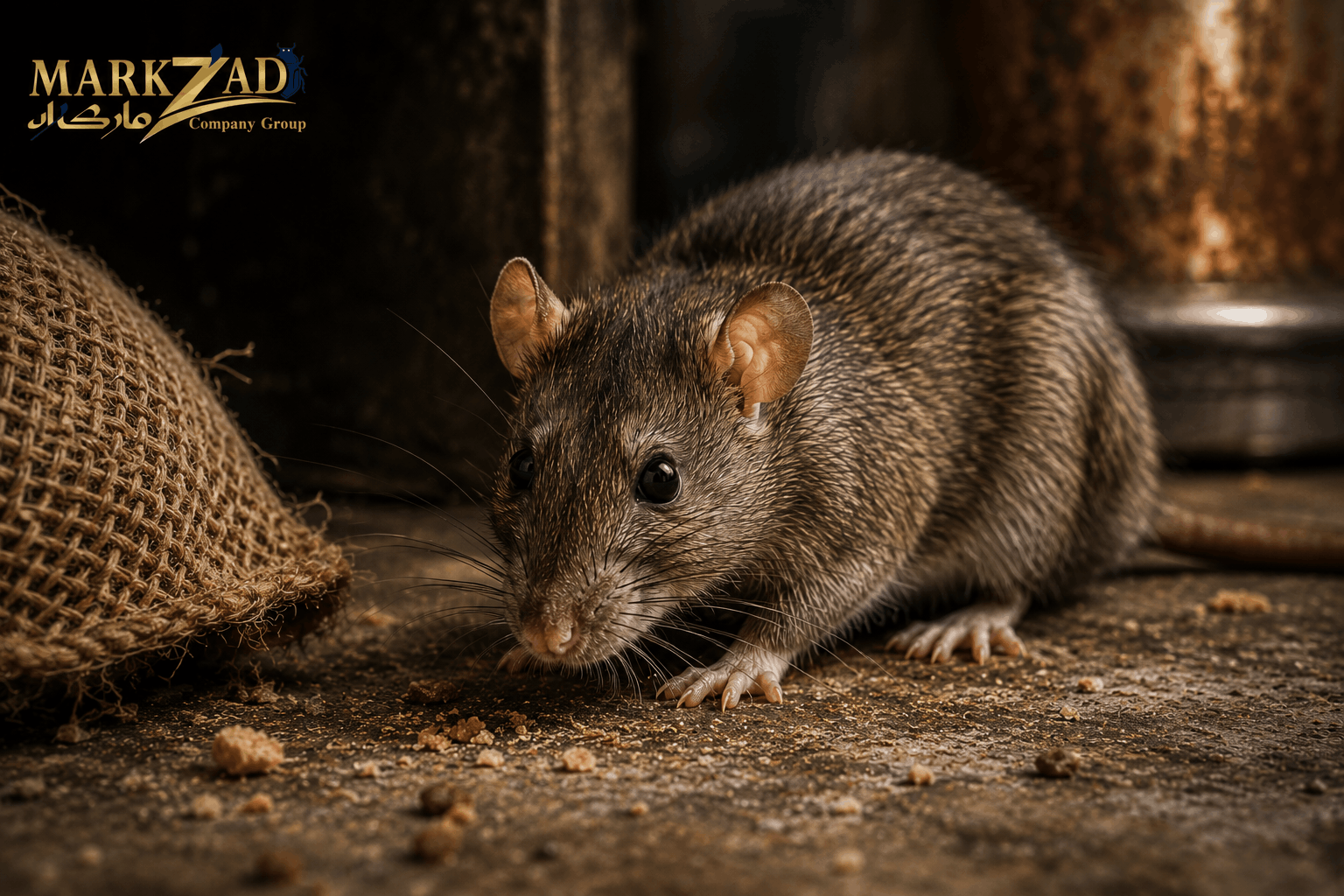

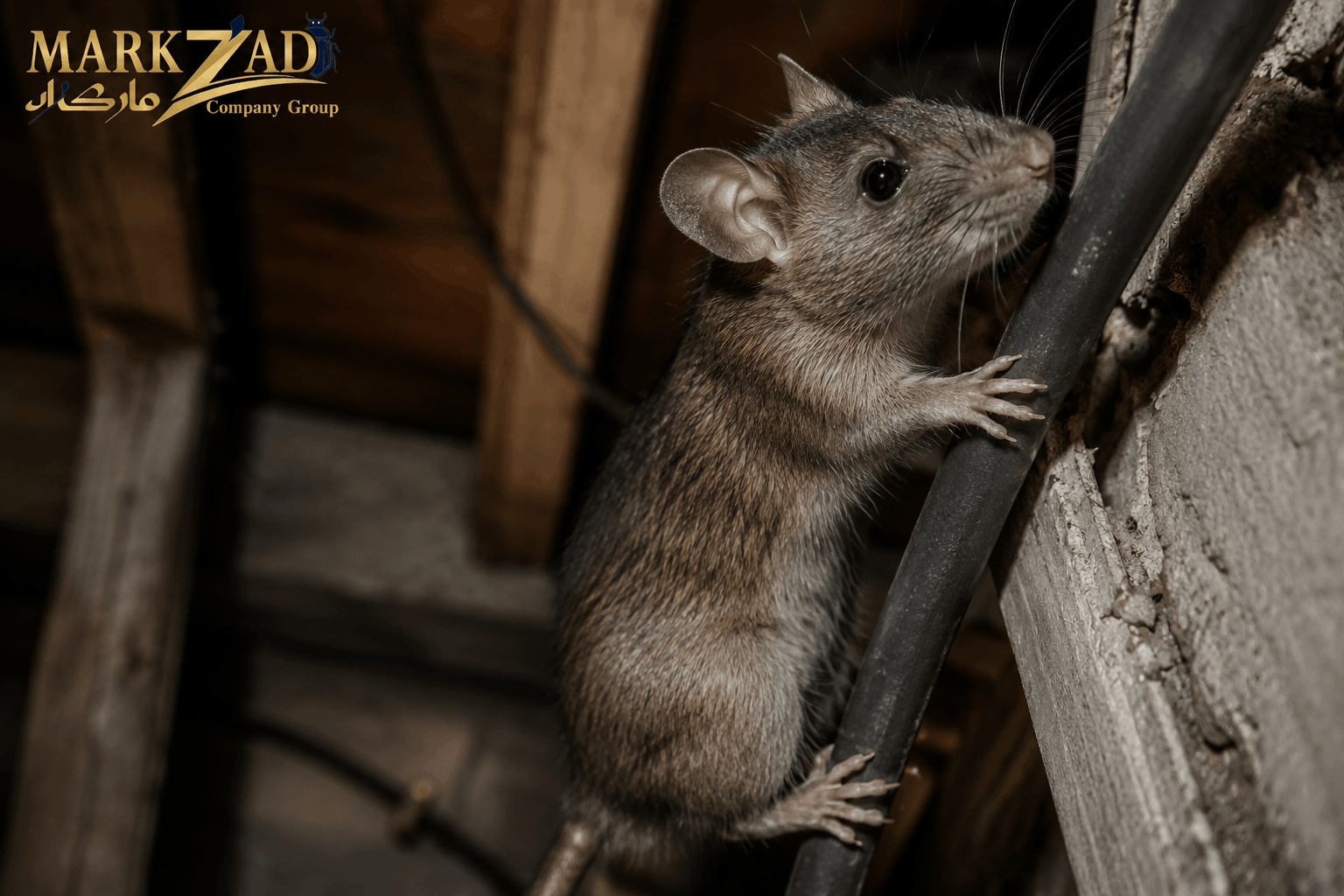
The roof rat, also known as the black rat, ship rat, or Rattus rattus, is a highly agile rodent known for its excellent climbing ability.
Unlike the heavier Norway rat, roof rats prefer elevated, dry locations such as ceilings, attics, roofs, trees, warehouses, and upper storage areas. They can enter buildings through vents, utility openings, tree branches, cables, windows, and roof gaps.
Their presence can lead to food contamination, damaged electrical wiring, destroyed insulation, and serious sanitation problems.
What Does a Roof Rat Look Like?
Roof rats commonly have:
- A slender, agile body.
- Black, gray, or dark-brown fur.
- A lighter underside.
- A pointed nose.
- Large, prominent ears.
- Relatively large eyes.
- A long, thin tail, usually longer than the combined head-and-body length.
- Strong climbing ability.
- A larger body than a house mouse but a lighter build than a Norway rat.
Their light weight and strong feet allow them to move along trees, cables, pipes, beams, and rough walls.
Where Do Roof Rats Live?
Roof rats commonly live in:
- Attics.
- Roof spaces.
- Suspended ceilings.
- Warehouses.
- Trees and palm trees.
- Ventilation openings.
- Utility rooms.
- Upper shelves.
- Kitchens and restaurants.
- Food-storage facilities.
- Areas around pipes and cables.
- Abandoned buildings.
- Farms and animal facilities.
- Cardboard and stored clutter.
They may construct nests from paper, fabric, insulation, plant material, and other soft materials.
Why Are They Called Roof Rats?
Roof rats are named for their ability to:
- Climb rough walls.
- Move across pipes and wires.
- Travel between trees and roofs.
- Enter through ventilation openings.
- Reach windows and upper floors.
- Nest inside ceilings and attics.
An infestation may therefore be concentrated in the upper part of a building without producing obvious ground-level burrows.
What Do Roof Rats Eat?
Roof rats are opportunistic feeders but often prefer:
- Fruit.
- Vegetables.
- Nuts.
- Grain.
- Seeds.
- Dates.
- Bird food.
- Pet food.
- Stored food.
- Food waste.
- Insects.
- Eggs and protein-rich foods when available.
They are often attracted to fruit trees, palm trees, kitchens, warehouses, and poorly protected food storage.
Roof Rat Behavior
Roof rats are mainly nocturnal. During the day, they hide inside nests, ceilings, trees, and undisturbed storage areas.
Common behaviors include:
- Traveling at elevated levels.
- Moving along pipes and cables.
- Avoiding unfamiliar objects.
- Reusing established routes.
- Jumping between surfaces and branches.
- Building nests from soft materials.
- Gnawing wires, wood, and plastic.
- Storing food in hidden areas.
- Escaping quickly when disturbed.
Their hidden movement inside roof voids can allow an infestation to grow before it is noticed.
Roof Rat Life Cycle
Roof rats reproduce rapidly when food, water, warmth, and shelter are available. Females can produce several litters, each containing multiple young.
The newborn rats are blind and dependent on their mother but develop quickly. A small infestation may therefore become a much larger population when conditions remain favorable.
Signs of a Roof Rat Infestation
Noises in Ceilings
Running, scratching, and gnawing sounds may be heard at night.
Droppings
Dark droppings may be found on shelves, inside cupboards, in attics, and near stored food.
Gnaw Marks
Damage may appear on:
- Electrical wiring.
- Wood.
- Food packaging.
- Cardboard.
- Plastic pipes.
- Insulation.
- Grain bags.
Unusual Odors
Urine and nesting materials may produce noticeable odors in enclosed spaces.
Nests
Nests made from paper, fabric, insulation, or plant material may be found inside roofs and attics.
Grease Marks
Repeated movement can leave dark, greasy marks along beams, pipes, walls, and cables.
Damaged Stored Goods
Torn bags, food packaging, and cardboard boxes may indicate rodent activity.
Pet Behavior
Pets may react to sounds or movement inside walls and ceilings before people notice the infestation.
Damage Caused by Roof Rats
Food Contamination
Roof rats may contaminate food and surfaces with droppings, urine, fur, and microorganisms.
Electrical Damage
Gnawed electrical cables may cause equipment failure, short circuits, or increased fire risk.
Insulation Damage
Rats may tear insulation and use it for nesting.
Warehouse Losses
They damage packages and may contaminate more food than they consume.
Structural and Material Damage
Roof rats gnaw wood, plastic, doors, containers, and utility materials.
Nighttime Disturbance
Their movement inside walls and roofs can disrupt sleep and comfort.
Damage to Business Reputation
Rodent activity in restaurants, hotels, warehouses, and food facilities can severely affect customer confidence.
Health and Sanitation Risks
Roof rats, their waste, and their parasites may be associated with health and sanitation risks. Contamination can occur when they move across food, equipment, and preparation surfaces.
Risk increases when food is exposed, droppings accumulate, infestations become large, or contaminated areas are cleaned without proper precautions.
Live or dead rodents and their waste should not be handled with bare hands.
Do Roof Rats Bite People?
Roof rats generally try to escape from people, but they may bite if trapped, cornered, or handled.
They should not be caught by hand. Any rodent bite should be washed thoroughly and assessed by a medical professional when appropriate.
Roof Rats Versus Norway Rats
Roof Rats
- Slender and agile.
- Large ears.
- Pointed nose.
- Long tail.
- Excellent climbers.
- Common in roofs and trees.
- Prefer elevated, dry locations.
- Often feed on fruit, nuts, and grain.
Norway Rats
- Larger and heavier.
- Smaller ears.
- Blunter nose.
- Shorter tail.
- Strong diggers and swimmers.
- Common near sewers and ground level.
- Often live in burrows and basements.
Correct identification is important because trap placement and entry-point control differ between the two species.
Roof Rats Versus House Mice
House mice are much smaller and produce smaller droppings. Roof rats are larger, have longer tails, and are more likely to travel across roofs, trees, pipes, and upper storage spaces.
How Do Roof Rats Enter Buildings?
Common entry routes include:
- Roof gaps.
- Vents.
- Poorly sealed windows.
- Openings around pipes.
- Tree branches touching the building.
- Cables leading to the roof.
- Air-conditioning openings.
- Service doors.
- Suspended ceilings.
- Wall and roof gaps.
- Gutters and exterior pipes.
- Infested shipments and cardboard.
Why Do Roof Rats Appear?
Factors that encourage infestations include:
- Tree branches touching roofs.
- Fallen dates and fruit.
- Exposed food.
- Grain stored in weak bags.
- Cardboard accumulation.
- Roof openings.
- Damaged vent screens.
- Pet food left out overnight.
- Uncovered garbage.
- Water leaks.
- Neglected attics and storage rooms.
- Unchecked deliveries.
- Nearby abandoned buildings.
How to Prevent Roof Rats
Trim Trees
Keep branches away from roofs, windows, and balconies.
Seal Roof Openings
Close gaps around vents, pipes, roof edges, and utility lines using strong, rodent-resistant materials.
Protect Ventilation Openings
Install suitable metal screens without blocking required airflow.
Store Food Securely
Keep grain, fruit, nuts, dates, and animal food in strong, sealed containers.
Remove Outdoor Food Sources
Collect fallen fruit and clean food waste around the building.
Organize Storage Areas
Raise boxes and products off the floor and leave inspection space around walls.
Manage Waste
Use tightly closed garbage containers and remove waste regularly.
Repair Leaks
Correct leaks from tanks, pipes, irrigation, and air-conditioning systems.
Inspect Attics
Regular inspection can reveal droppings, nests, gnawing, and new entry points.
How to Control Roof Rats
1. Inspect the Property
Identify the rodent species, nests, travel routes, entry points, food sources, water sources, and infestation level.
2. Remove Attractants
Secure food, remove fallen fruit, control waste, and eliminate unnecessary water.
3. Seal Entry Points
Close gaps after carefully determining rodent movement and avoiding careless exclusion that could trap animals inside inaccessible spaces.
4. Use Traps
Traps should be placed along elevated travel routes, including beams, shelves, attics, pipes, and areas containing confirmed signs.
5. Use Bait Stations Safely
Locked, tamper-resistant bait stations may be used when professionally appropriate. Rodenticide bait should never be left exposed around children, pets, food, or wildlife.
6. Address Outdoor Activity
Trees, roof edges, warehouses, garbage areas, and the building perimeter should be included in the control plan.
7. Monitor and Follow Up
Check traps and monitoring stations, remove carcasses safely, document signs, and continue monitoring until activity stops.
Common Roof Rat Control Mistakes
- Placing traps only at ground level.
- Ignoring ceilings and attics.
- Failing to trim trees.
- Leaving poison bait exposed.
- Keeping food accessible.
- Sealing openings without checking for trapped rodents.
- Using too few traps.
- Ignoring cardboard and incoming goods.
- Failing to inspect vents.
- Leaving dead rodents inside roof spaces.
- Ending control after noises temporarily stop.
- Using bait without correcting structural access.
MarkZad Roof Rat Control Services
MarkZad Company Group combats roof rats in homes, villas, restaurants, hotels, warehouses, factories, and other properties.
The service begins with a detailed inspection to identify:
- The rodent species.
- The level of infestation.
- Nesting areas in roofs and ceilings.
- Travel routes along pipes and walls.
- Structural entry points.
- Food and water sources.
- Trees and outdoor conditions supporting activity.
- Damage to wiring, insulation, or stored products.
Based on the inspection, MarkZad develops an integrated rodent-control program that may include:
- Strategic placement of traps in elevated locations.
- Locked bait stations when appropriate.
- Identification of nests and movement routes.
- Recommendations for sealing entry points.
- Treatment of attics, roofs, and warehouses.
- Safe carcass removal.
- Improved storage and waste management.
- Scheduled monitoring and follow-up.
MarkZad does not focus only on removing the visible rodent. Its approach also addresses access points, nesting locations, and the conditions that allow roof rats to return.
Roof Rat Control in Restaurants and Warehouses
An effective program may include:
- Inspecting suspended ceilings.
- Monitoring upper storage areas.
- Checking incoming deliveries.
- Protecting food and raw materials.
- Sealing openings around utilities.
- Cleaning garbage zones.
- Trimming nearby trees.
- Using numbered monitoring stations.
- Recording activity and results.
- Conducting regular follow-up visits.
MarkZad provides programs suited to the size, activity, and infestation level of commercial and food-related properties.
Safe Cleanup After Roof Rat Activity
When droppings are found:
- Do not touch them with bare hands.
- Do not aggressively sweep dry waste.
- Avoid vacuuming dry contamination directly.
- Ventilate the area when possible.
- Wear suitable gloves.
- Apply an appropriate disinfectant according to its label.
- Collect waste in sealed bags.
- Clean surrounding surfaces.
- Wash hands thoroughly.
- Use professional cleaning support for extensive contamination.
Conclusion
The roof rat is a slender, agile rodent capable of reaching attics, roofs, trees, ceilings, and upper storage areas. It can contaminate food, damage electrical wiring and insulation, and destroy stored products.
Successful control depends on detailed inspection, food and water management, tree trimming, sealing roof openings, properly positioned traps or bait stations, and continued monitoring.
MarkZad Company Group combats roof rats through an integrated program targeting existing rodents, nests, travel routes, access points, and the environmental conditions that support reinfestation.