
Scorpions
Scorpions are among the most concerning pests when they appear inside homes, farms, rest areas, warehouses, or commercial facilities. Although scorpions are not insects, they are considered important pests because they can sting and may pose a risk to people, especially children and elderly individuals.
Scorpions usually live in warm, dry environments. They prefer hiding in cracks, under rocks, around wood piles, inside burrows, and in dark places that are rarely disturbed. They may enter homes while searching for shelter, moisture, or food, especially when insects are available.
Identification
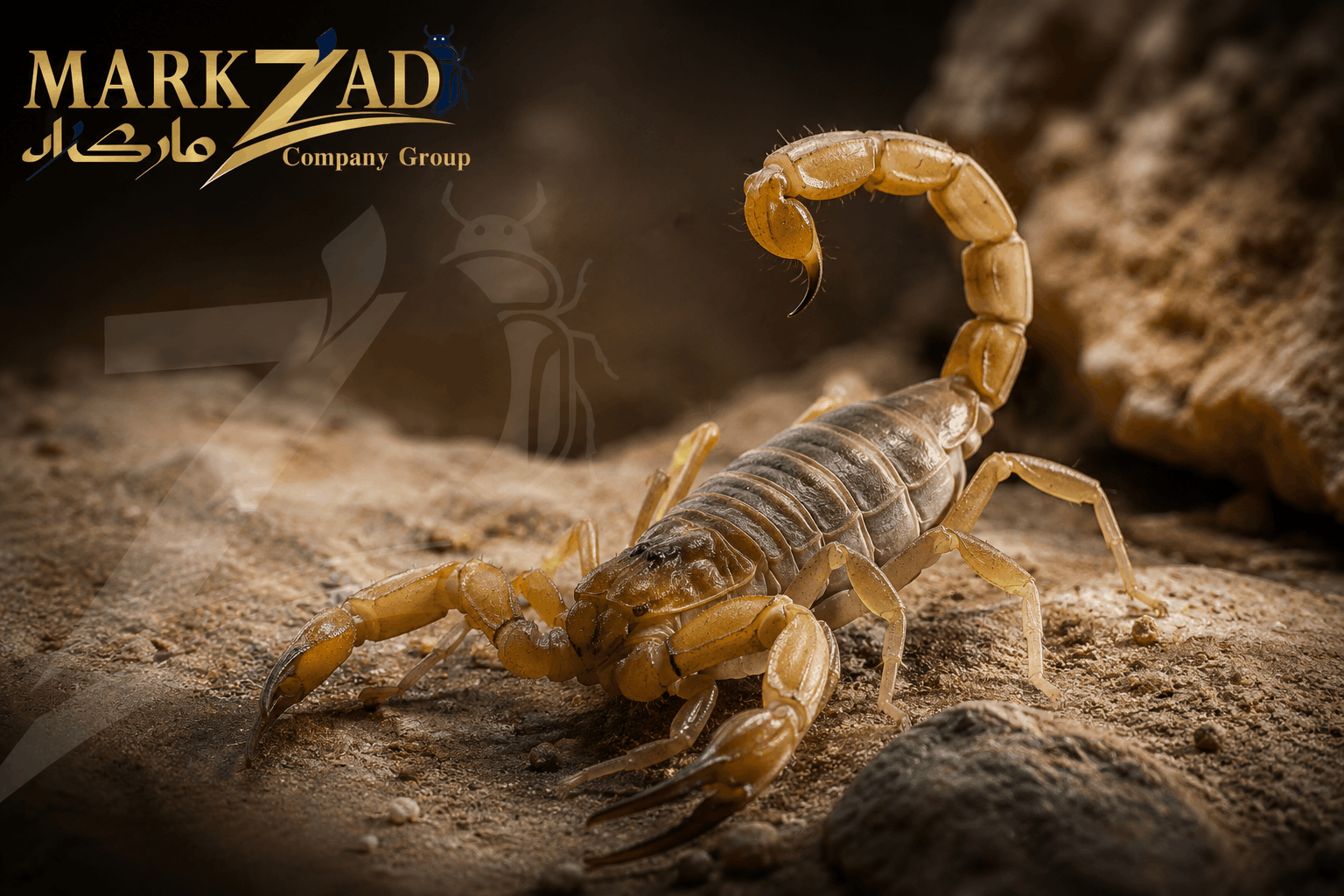
Scorpions have a distinctive body shape. They have eight legs, a pair of front claws, and a curved tail ending with a stinger. Their color may vary depending on the species and environment, including black, yellow, brown, or sandy shades.
Common features include:
- A relatively flat body.
- Two front claws.
- A curved tail.
- A stinger at the end of the tail.
- Nocturnal activity.
- Hiding during the day.
- Increased movement at night.
Scorpions are most active at night when they search for food and move away from heat and direct light.
Common Habitats
Scorpions prefer dark, warm, and protected places. They may be found in:
- Gardens and yards.
- Farms and rest areas.
- Desert and rocky areas.
- Under stones and wood.
- Warehouses and storage rooms.
- Cracks in walls and floors.
- Electrical rooms and meter boxes.
- Under unused furniture.
- Around insect activity.
- Near homes close to open land.
In hot and dry regions, scorpion activity may increase around properties near desert land, gardens, farms, or poorly organized storage areas.
Causes of Scorpion Activity
Scorpions may appear around homes and facilities for several reasons, including:
- Cracks and gaps that allow entry.
- Accumulated rocks, wood, or debris.
- Presence of insects that scorpions feed on.
- Poor yard or storage cleaning.
- Doors and windows left open.
- Nearby desert, rocky, or agricultural areas.
- Dark hiding places.
- Weak outdoor lighting.
- Lack of mesh screens on openings.
The presence of scorpions often means the location provides shelter and food. Therefore, removing only the visible scorpion is not enough. The cause of attraction must also be treated.
Risks and Dangers
The main danger of scorpions is their sting. Scorpions use the stinger at the end of their tail when they feel threatened. The severity of a sting depends on the species, the person’s age, health condition, and the sting location.
A scorpion sting may cause:
- Severe localized pain.
- Redness or swelling.
- Burning or tingling sensation.
- Anxiety and discomfort.
- More serious symptoms in some cases.
Medical safety guidance recommends contacting a qualified healthcare provider or poison control center after a scorpion sting. Ice may be applied, but the affected area should not be submerged in ice water. Medical care is especially important if a child is stung or if breathing difficulty or severe symptoms occur.
Signs of Scorpion Presence
Scorpions can be difficult to detect because they hide during the day. Common signs include:
- Seeing a scorpion indoors or outdoors.
- Night activity near walls or doors.
- Scorpions under stones or wood.
- Movement in storage areas.
- Increased insect activity that may attract scorpions.
- Cracks and gaps suitable for hiding.
If one scorpion is found, the area should be inspected carefully because suitable conditions may allow more scorpions to exist nearby.
Prevention Methods
Preventing scorpions depends on blocking entry points and reducing shelter and food sources. Important prevention steps include:
- Cleaning yards and gardens regularly.
- Removing rocks, wood, and debris.
- Sealing cracks and gaps in walls and floors.
- Installing mesh screens on windows and vents.
- Keeping doors closed, especially at night.
- Reducing insect activity around the property.
- Organizing storage rooms.
- Keeping boxes and stored items off the floor.
- Checking shoes and stored clothing before use.
- Improving outdoor lighting.
- Removing unused furniture and clutter.
These steps can help reduce the chance of scorpions entering or staying around the property.
Scorpion Control Methods
Scorpion control requires careful and professional treatment because scorpions hide in narrow, dark places. Effective control may include:
- Detailed inspection of the property.
- Identifying hiding and entry points.
- Treating cracks, corners, and rocky areas.
- Reducing insects that attract scorpions.
- Applying suitable pest control materials in targeted areas.
- Treating the building perimeter.
- Sealing entry points after treatment.
- Monitoring the site after service.
Random spraying may not be enough. Successful scorpion control requires inspection, targeted treatment, prevention, and entry-point management.
When to Call a Professional Pest Control Company
You should contact a professional pest control company if scorpions appear repeatedly, if children live in the property, or if the location is near desert land, farms, or rest areas. Professional treatment is also important if scorpions appear in bedrooms, kitchens, warehouses, or commercial facilities.
MarkZad Pest Control provides professional scorpion control solutions through property inspection, hiding-place identification, treatment of attraction sources, and prevention methods that help reduce future scorpion activity.
Conclusion
Scorpions must be handled carefully because their presence inside homes or facilities may create safety concerns, especially for children and elderly people. Prevention starts with cleaning the area, removing debris, sealing openings, and controlling insects that attract scorpions.
If scorpions are appearing around your home, rest area, farm, or facility, a specialized team such as MarkZad Pest Control can help manage the problem in a safe, organized, and effective way.
scorpions, scorpion control, scorpion prevention, scorpion sting, pest control, scorpions in home, professional scorpion control